
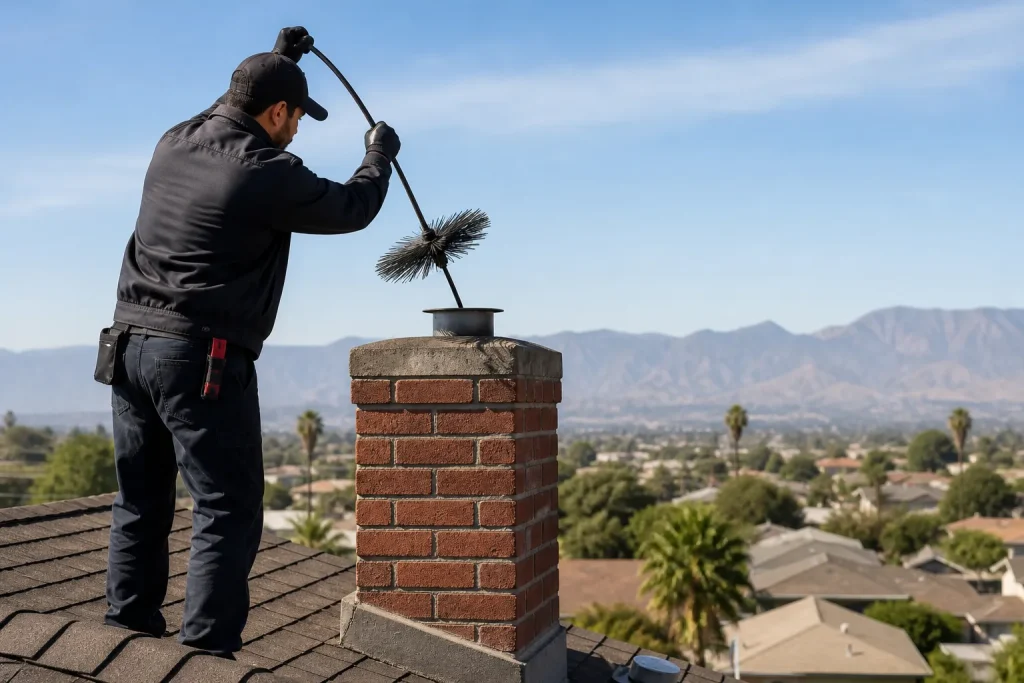
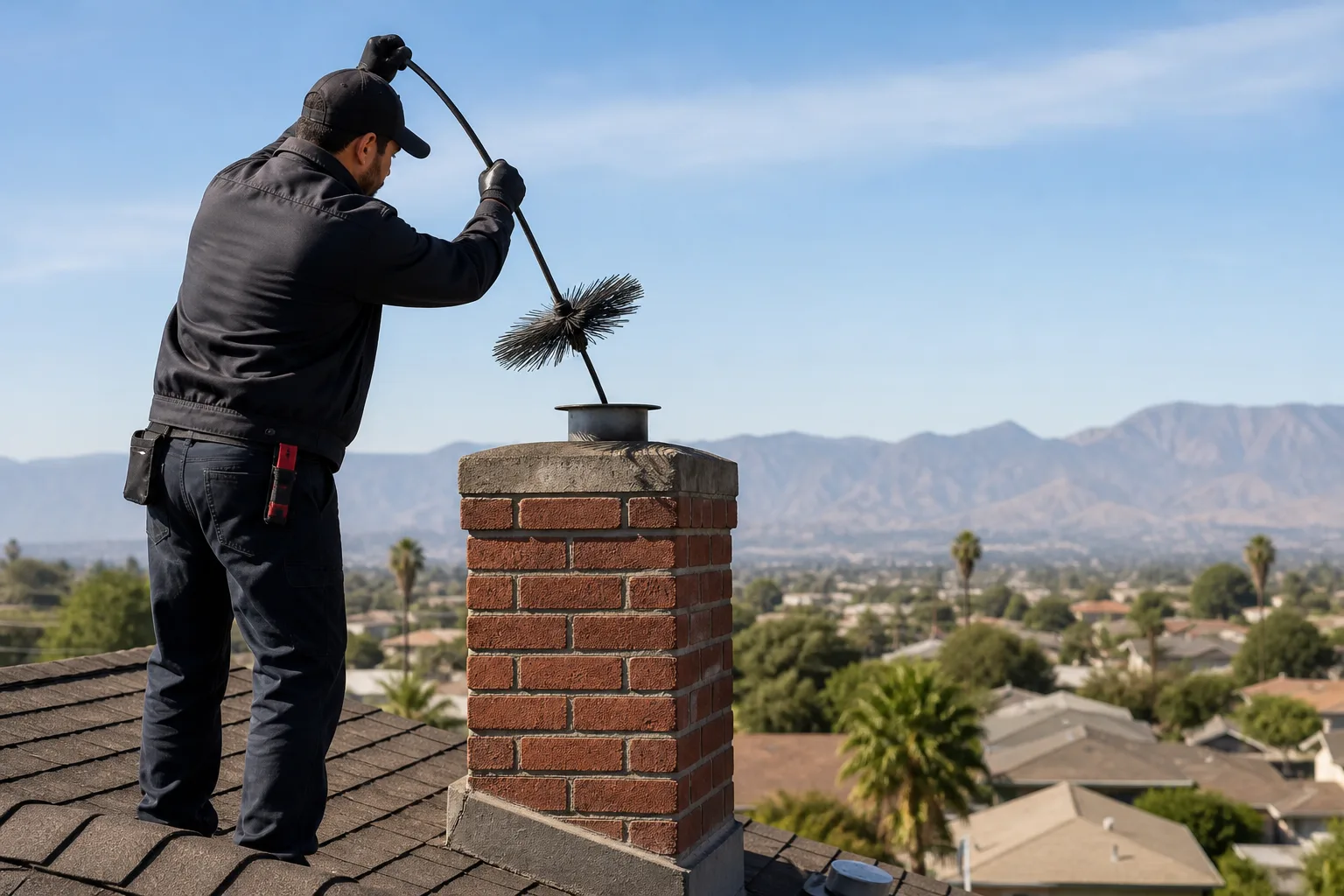
Emergency Chimney Sweep Near Me: What Jurupa Valley Homeowners Should Do First
If you’re seeing flames in your flue, hearing a roar that sounds like a freight train above your fireplace, or your carbon monoxide detector is going off, the first call is to 911, not a chimney sweep. A chimney sweep becomes the right call after the immediate danger is handled, when you need a professional inspection to figure out what happened and what comes next. If you’d rather not sort through this alone, call us at (866) 285-4905 and we’ll walk you through it.
Here’s the thing most “emergency chimney sweep” articles won’t tell you: “emergency” means three very different things depending on what’s actually happening in your Jurupa Valley home. A chimney fire, a blocked flue, and carbon monoxide symptoms all demand different first moves. Getting the order right matters more than getting someone on the phone fast.
The Three Real “Emergency” Scenarios in Jurupa Valley
We’ve worked on chimneys across Jurupa Valley, from the older homes near the Santa Ana River bottom up through the newer developments off Limonite Avenue, and the calls that come in labeled “emergency” almost always fall into one of three buckets. Each one has a different correct first step.
Scenario 1: An active chimney fire. This is the one where you call 911 first. A chimney fire sounds like a jet engine or a freight train rumbling through the flue. The chimney gets hot enough that nearby walls feel warm to the touch. Flames or dense smoke may shoot out the top. You might see cracking or popping from the flue tiles. Do not open the damper wider, do not throw water in the firebox, and do not go on the roof. Get everyone out, call 911, and wait for the fire department to clear the structure.
Scenario 2: Animal intrusion or sudden blockage. A family of raccoons, a bird’s nest, or a section of dislodged flue tile drops into the chimney overnight. The symptom is usually smoke backing into the house the moment you light a fire, or a constant draft smell that wasn’t there last week. This one is urgent but not a 911 call. Close the damper, don’t light anything, and call a sweep who carries inspection cameras. You need someone who can see what’s blocking the flue before touching it.
Scenario 3: Carbon monoxide symptoms. Headache, dizziness, nausea that gets worse in one room, especially after using the fireplace or furnace. A detector going off that won’t stop. This one’s also 911, or at minimum getting everyone outside into fresh air while you call the gas company or fire department. Carbon monoxide doesn’t smell. By the time you feel sick, the concentration is already a problem.
How to Tell If You’re Having a Chimney Fire Right Now
A normal fire crackles. A chimney fire roars. That’s the single most reliable distinction, and it’s the one Jurupa Valley homeowners tend to miss because nobody ever tells them what to listen for until it’s happening.
Chimney fires burn inside the flue, where creosote has built up on the walls. Creosote is the black, tar-like residue that condenses from wood smoke. It’s highly flammable. When it ignites, it burns hot and loud. Here’s what to look for:
- Sound: A low rumbling or loud roaring noise, sometimes described as a freight train or a helicopter hovering low. Your normal fireplace never makes this sound, so if you hear it, act.
- Heat: The chimney chase or the wall around the fireplace feels unusually warm. If you can feel heat radiating through brick or drywall, the fire is not contained where it should be.
- Smoke: Thick, dark smoke pouring from the chimney top. Not the wispy gray smoke of a normal fire. This looks dense and urgent.
- Flames: Visible fire or glowing at the top of the chimney or shooting from the cap.
- Debris: Chunks of creosote falling into the firebox, sometimes still burning. They look like dark, crusty embers.
If you see or hear any of this, don’t second-guess it. Evacuate the house and call 911. Once the fire department has confirmed the fire is out and the structure is safe, that’s when you call a chimney professional. The inspection that follows is not optional. A chimney that’s had a fire needs to be evaluated for cracked flue tiles, damaged mortar joints, and a compromised liner.
Damper Open or Closed? Why It Depends on the Emergency
This is one of the most common mistakes we see, and it’s worth spelling out clearly because getting it backwards genuinely makes things worse.
During a suspected chimney fire: Close the damper if you can do so safely without getting near the firebox. Closing the damper cuts off oxygen to the flue, which can slow the fire. Do not open doors or windows near the fireplace. Do not turn on the fire. And do not pour water into the firebox, which can crack the firebrick and send steam and debris into the room. The fire department has the right tools. Your job is to get out.
During a suspected blockage: Keep the damper closed. You don’t want smoke, animal debris, or carbon monoxide drafting back into the house. Don’t light anything, don’t try to poke whatever’s blocking the flue, and don’t use the fireplace until a professional with a camera has inspected the full flue path. A broom handle will not solve the problem, and it may push whatever’s blocking the flue into a worse position.
We’ve pulled a raccoon out of a flue over in the Rubidoux side of Jurupa Valley a few months back. The homeowner had been trying to nudge it with a garden rake for two days before calling us. The animal was fine. The flue liner wasn’t. If something’s in your chimney, leave it alone and call someone who can see what they’re dealing with.
What “Emergency Chimney Service” Actually Means
Not every chimney company that shows up for an emergency call is equipped to do the same thing. If you need emergency service in Jurupa Valley, ask one question before you book: does the technician carry a camera on the truck, or is this a brush-and-bag operation?
The difference matters. A brush-only sweep can clean your chimney but can’t tell you whether the flue liner cracked during a chimney fire or whether the blockage you’re dealing with is an animal, a nest, or dislodged masonry. They’ll look up with a flashlight, make an educated guess, and leave you with a recommendation to call someone else. That’s not a knock on them, it’s just the reality of the equipment.
Our trucks carry inspection cameras and repair stock because we don’t want to tell a Jurupa Valley homeowner “you’ve got a problem” without being able to show them exactly what it looks like on screen. We use HeatShield chimney resurfacing compound for deteriorating flue tiles, which is a restoration-level repair most brush-only companies don’t offer. We carry DuraFlex liner systems for full relining work. And we source from Olympia Chimney and Famco when we need venting components or replacement parts. You should know what’s going into your chimney, not just that something went wrong.
Document Everything Before Repairs Start (Your Insurance Will Thank You)
If your chimney fire was significant enough to involve the fire department, your homeowner’s insurance will likely cover a portion of the repair. But only if you document the damage properly, before anyone touches it.
Here’s the process we recommend for Jurupa Valley homeowners:
- Photograph everything immediately after the fire department clears the scene. The firebox, the damper, the top of the chimney if you can safely access it, and any visible cracks in the surrounding wall. Use your phone. Take more photos than you think you need.
- Keep the fire department’s incident report number. Your insurance company will ask for it. It’s also useful documentation of what happened and when.
- Do not clean anything until the insurance adjuster or a chimney professional has documented the damage. Don’t sweep out the firebox, don’t wipe down the walls, don’t scrape off creosote. The evidence of how hot things got is part of the story.
- Get a camera inspection done and ask for the images. We provide camera inspection photos as part of our repair evaluation. They’re yours. They show exactly what the flue looks like from the inside, which matters when an adjuster can’t physically access the flue themselves.
- Request a written estimate that separates cleaning from repair. Insurance typically covers repair, not routine cleaning. If the estimate lumps them together, expect pushback.
One more thing: if the chimney fire was caused by a lack of maintenance, document when you last had the chimney swept. If the answer is “never” or “I don’t remember,” be honest with your adjuster. They’ll find out anyway, and the conversation goes better when it starts with the truth.
When to Call a Professional (and When You Can Wait)
Not everything that feels like an emergency actually deserves a rush call. Here’s our rule of thumb:
Call immediately if: you’ve had a chimney fire, your carbon monoxide detector is going off, you can see water pooling in the firebox during a storm, or animals are audibly moving in the chimney. These are situations where the safety of your family and the condition of your home are actively at risk.
You can wait a few days if: you’re overdue for an annual sweep and it’s September. The smell is mild. The firebox has normal ash buildup. You’re thinking about using the fireplace for the first time this season and want a checkup. These are maintenance calls, not emergencies, even if they get scheduled urgently in late fall. Book early, and you’ll skip the October rush.
If you’re not sure which bucket your situation falls into, call us at (866) 285-4905 and describe what’s happening. We’ll tell you honestly whether you need someone today or whether it can wait until next week. We don’t sell emergency visits to people who don’t need them.
Related services in Jurupa Valley: chimney sweeping covers your annual cleaning. If the problem turns out to be structural, see our chimney repair page. And while you’re thinking about fire safety, don’t forget that your dryer vent needs cleaning too. Lint buildup is one of the most common household fire hazards we see in Jurupa Valley homes.
Key Takeaways
- A roaring sound, intense heat, or visible flames in the flue means call 911 first. A chimney sweep comes after the fire’s out.
- Blockages and animal intrusions are urgent but not 911 emergencies. Close the damper and call a professional with a camera.
- Carbon monoxide symptoms demand fresh air and emergency services immediately. Do not wait for a sweep.
- Closing the damper during a chimney fire is right. Keep it closed during a blockage too, but for a different reason. Don’t light anything either way.
- Ask whether the chimney company carries inspection cameras and repair materials on the truck. The answer tells you what you’re really paying for.
- Document damage thoroughly before any cleaning or repair work. Your insurance claim depends on it.
The Bottom Line
Emergency chimney situations in Jurupa Valley break down into three categories, and only one of them, a blockage, sends you to a chimney sweep as the first call. Chimney fires and carbon monoxide symptoms are 911 situations first. Once the immediate danger is resolved, you need a chimney company that can inspect, clean, and repair with camera evidence and professional-grade materials. If you’re in Jurupa Valley and need help figuring out what’s going on in your chimney, call us at (866) 285-4905 for a free estimate. We’ll show you exactly what we find and tell you honestly what needs to be done. Learn more at our Chimney Sweep Jurupa Valley home page.
Frequently Asked Questions
Emergency or after-hours chimney service in Jurupa Valley typically runs $250 to $450 depending on the time of day, the nature of the problem, and whether camera inspection or repair work is needed. Routine sweeps cost less, usually $150 to $300, which is one more reason to stay ahead of the problem. Exact pricing depends on your chimney’s condition, and the only way to get a real number is to have someone look at it. Call (866) 285-4905 for a free estimate, and we’ll be straight with you about what you’re paying for.
Not always, but you need an inspection to find out for sure. A chimney fire can crack flue tiles or damage a metal liner, and if that’s the case, the answer may be yes. We use camera inspection to see the actual condition of the liner before recommending replacement. In some cases, HeatShield resurfacing can repair damaged tiles without a full reline. If a full reline is needed, DuraFlex liner systems give you a professional-grade replacement. The point is: no blind recommendations. You’ll see the video footage with your own eyes.
Once a year, at minimum, if you burn wood regularly. The National Fire Protection Association standard is an annual inspection and cleaning as needed. Here in Jurupa Valley, where winter burns can stretch from November through February and lots of homes also have gas inserts running year-round, annual service is the safe baseline. If you burn unseasoned wood or burn frequently, you may need more than one sweep per year. A camera inspection tells us exactly how much creosote has built up.
Creosote builds up, and creosote is flammable. That’s how chimney fires start. Even if a fire never happens, that creosote can restrict airflow, push smoke and carbon monoxide into your living space, and make your fireplace smell during the summer. A blocked flue from animal intrusion gets worse over time too. The animal decomposes, the nest collapses, and the blockage gets harder to remove. An annual sweep costs far less than the repairs we do after years of neglect. Call (866) 285-4905 and book before high season, when Jurupa Valley’s chimney companies are all booking two or three weeks out.
Written by the team at Chimney Sweep Jurupa Valley, serving Jurupa Valley since 2015.
Need Chimney Cleaning Help?
Call Chimney Sweep Jurupa Valley - licensed & insured, here with fast help in Jurupa Valley.
(866) 285-4905