
Last updated November 2, 2026
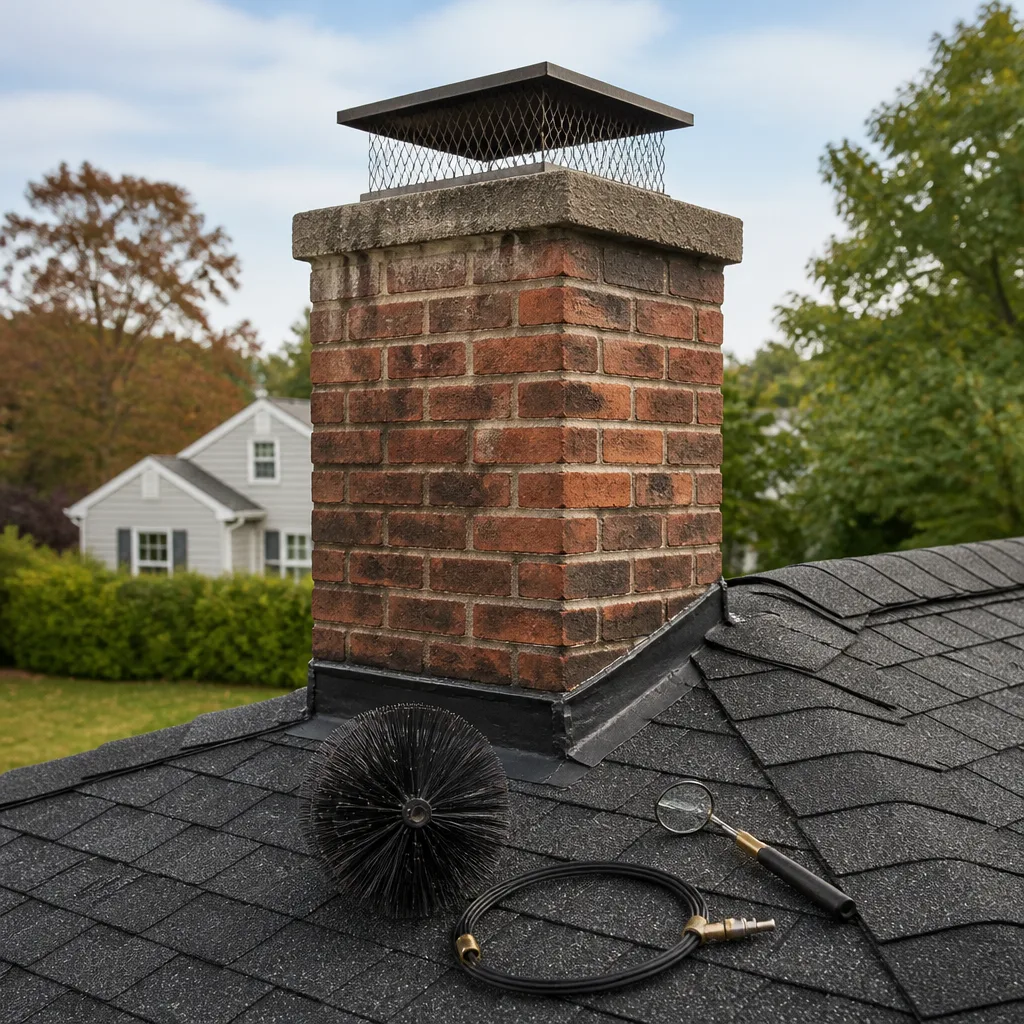 Sweep & inspection
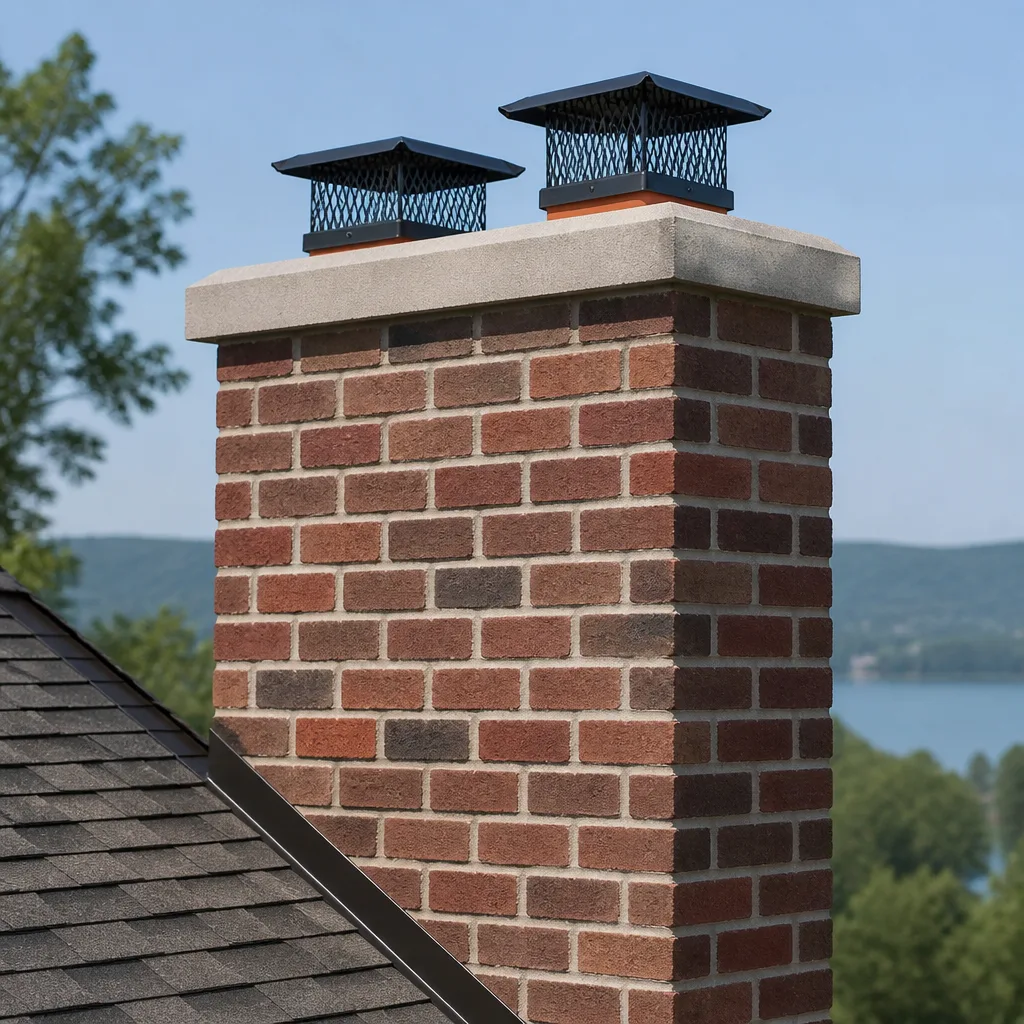 Caps & crowns
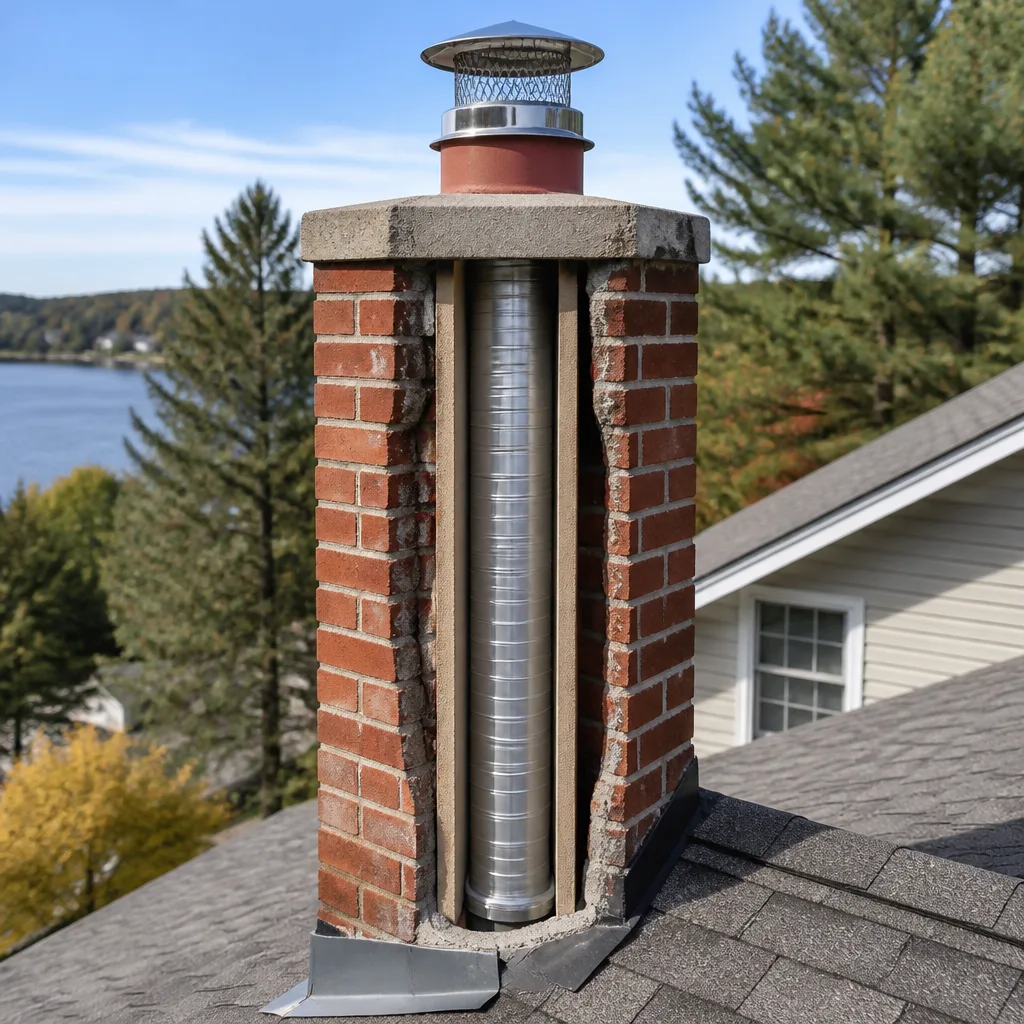 Flue relining
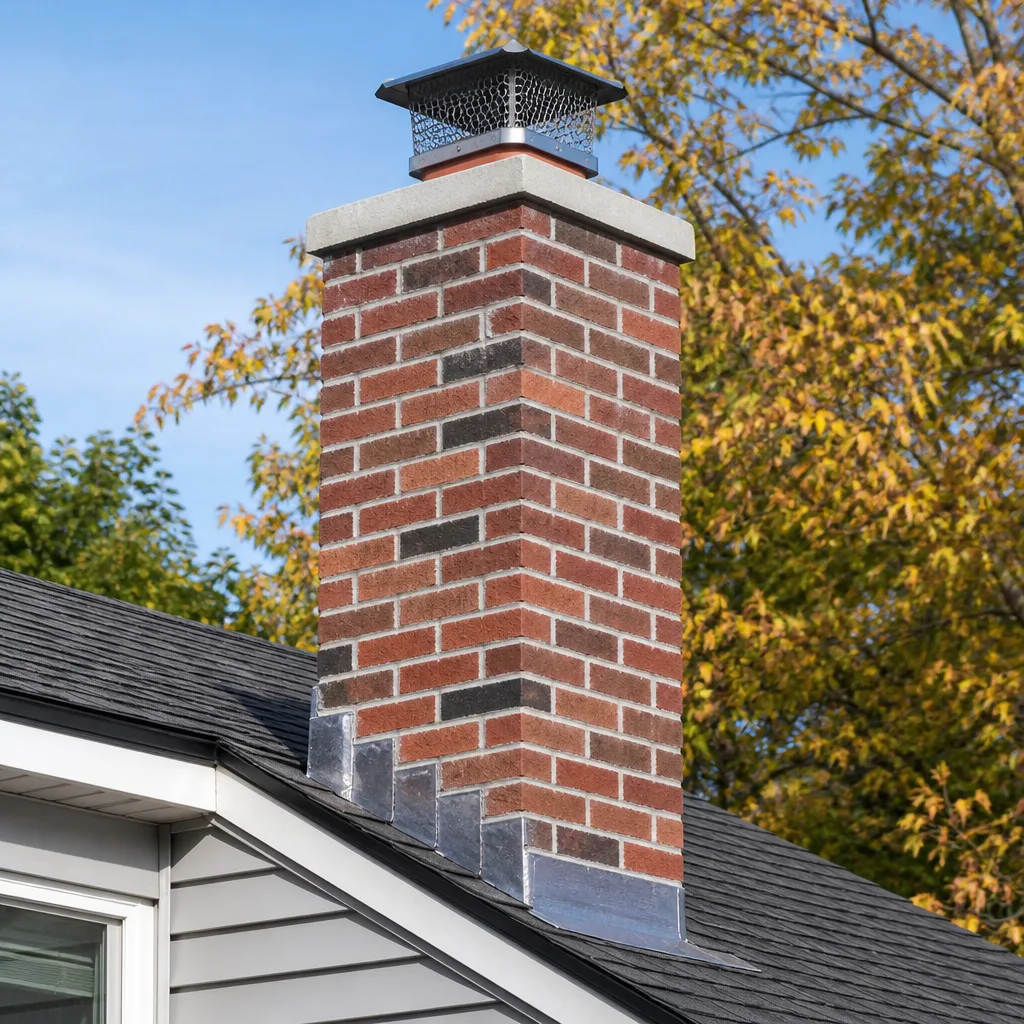 Masonry repair
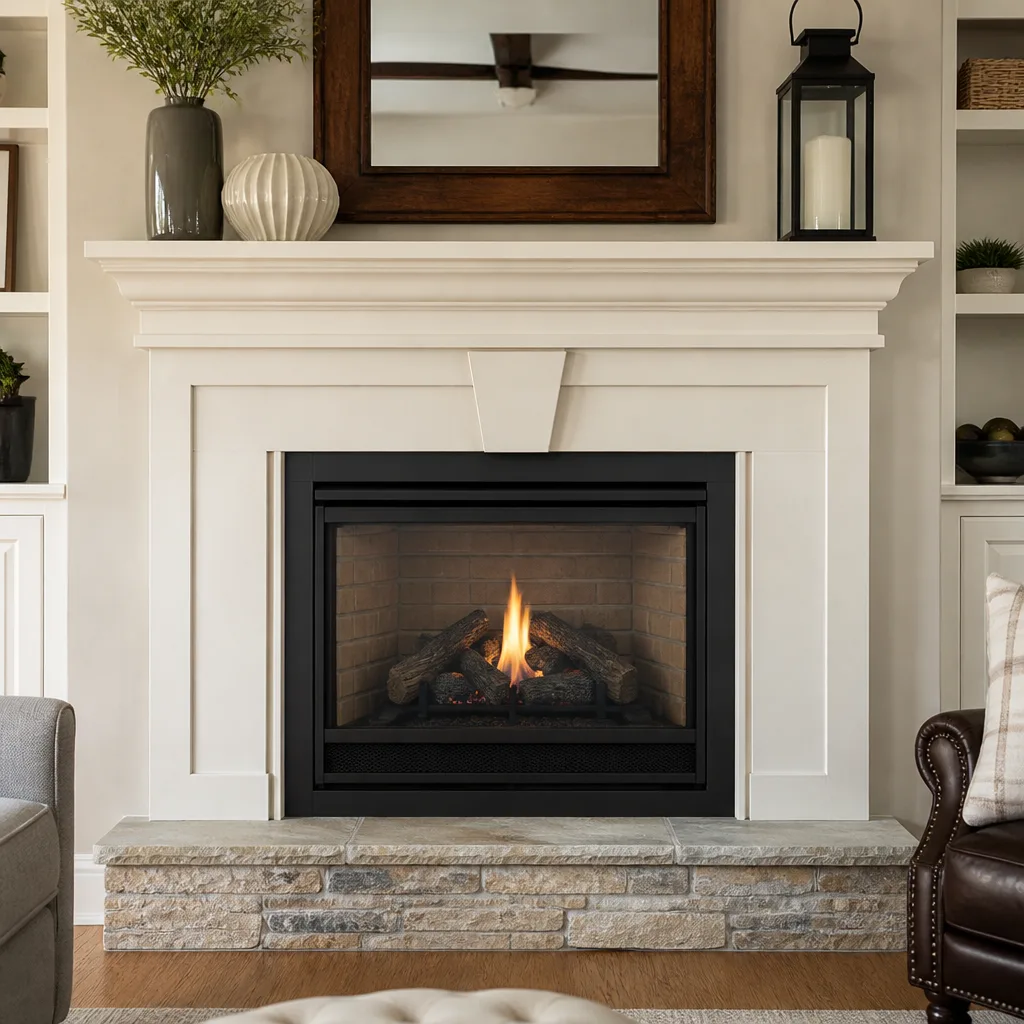 Gas fireplace service
Level 1 sweep and inspection to the NFPA 211 annual standard - flue, crown, cap, and flashing checked and photographed
Chimney sweep logs do not sweep chimneys. They loosen some creosote - which then falls where a brush and vacuum still have to collect it.
Seasonal Chimney Cleaning Care for Jurupa Valley: Year-Round Homeowner’s Guide
Most national chimney maintenance guides are written for places with real winters: Vermont, Minnesota, the mountain West. Jurupa Valley is not those places. Here, the burn season runs short – maybe November through February – but the conditions that damage chimneys run all year: summer heat that bakes crown mortar into hairline cracks, Santa Ana winds that pack flues with desert debris, and a fire season that leaves a fine layer of ash on everything including the inside of your chimney. This guide is built around what actually happens to chimneys in the Inland Empire, month by month. If you’ve ever wondered why your chimney looks the way it does after a Jurupa Valley summer, or why you should schedule a sweep in March instead of October, you’ll find the answer here.
Quick Answer
In Jurupa Valley, the most effective chimney cleaning schedule is a post-burn-season sweep in February or March, not the pre-season sweep everyone books in October. The region’s short fire window means deposits build fast, and the Santa Ana season drops debris into flues between fires. If you burn more than five or six fires between November and January, add a lightweight mid-season check in January. Gas log sets can go two years between cleanings; split oak needs annual attention; manufactured logs leave moisture-heavy residue that deserves a look after every season of use.
Styles & brands we work with
- Sweep & inspection
- Caps & crowns
- Flue relining
- Masonry repair
- Gas fireplace service
Table of Contents
- Why Post-Burn-Season Cleaning (February – March) Beats Pre-Season Cleaning in Jurupa Valley
- The Summer Checklist: Heat, Crown Mortar, and Cap Screens
- Fall Prep for Jurupa Valley: Santa Ana Debris and the First Fire
- The January Mid-Season Check: What to Look For Without a Full Sweep
- Fuel Type and Cleaning Frequency: Manufactured Logs vs. Split Oak vs. Gas Logs
- Signs Your Chimney Needs Attention Between Scheduled Cleanings
- Common Mistakes to Avoid
- When to Call a Professional
Why Post-Burn-Season Cleaning (February – March) Beats Pre-Season Cleaning in Jurupa Valley
Scheduling your chimney cleaning in October, right before you want to light the first fire of the season, is the worst timing in Jurupa Valley. October is when every homeowner in the Inland Empire suddenly remembers their fireplace exists, and the backlog means you’re waiting weeks for a sweep, often while the first cool nights pass. But the timing problem goes deeper than scheduling. A post-burn-season cleaning in February or March does something a pre-season sweep can’t: it removes the actual combustion deposits your fires produced, before they have a full spring and summer to interact with whatever moisture and heat cycles come next.
Here’s what we’ve seen repeatedly in Jurupa Valley homes. A family burns a dozen fires between November and January, producing creosote that sits inside the flue. By the time October rolls around again, that creosote has been through a full Inland Empire summer: weeks of 100-degree heat, a few surprise rain events, and the constant dry air that makes Jurupa Valley what it is. Creosote is hygroscopic, meaning it absorbs moisture from the air. When moisture gets into creosote, it becomes corrosive and acidic. That’s when the metal components inside your chimney – damper assemblies, the chimney repair components that hold everything together – start degrading faster than they should.
A February or March sweep removes creosote while it’s fresh, before the summer bake. It also means you enter the next burn season with a clean flue, no October rush, and no anxiety about whether the chimney is ready. If the sweep finds something that needs repair, you have spring and summer to address it at a normal pace, not in the panicked window between Santa Ana events in November.
The Jurupa Valley rhythm looks like this:
- November – January: Burn season. Short, concentrated, often interrupted by unseasonably warm stretches.
- February – March: Post-season sweep. Remove deposits while they’re fresh. Assess any damage from the burn season.
- April – June: Repair window. Address whatever the sweep found, from cracked crown mortar to a failing damper. This is when Chimney Sweep in Jurupa Valley services have the most scheduling flexibility.
- July – September: Heat-stress inspections and cap screen checks. The summer heat is doing its own kind of damage, and catching it before fall means you’re not scrambling.
- October: Light prep. Clear any debris from Santa Ana events. Confirm the flue is ready for the first fire.
That’s the annual cycle that matches what Jurupa Valley’s climate actually does to chimneys. It’s not a theory. It’s what the calendar dictates when your burn season is 90 days long and your summer is six months of dry heat.
The Summer Checklist: Heat, Crown Mortar, and Cap Screens
Jurupa Valley summers are brutal on masonry. Not because of rain or freeze-thaw cycles – we don’t get those – but because of sustained heat and the thermal cycling that happens between day and night. A typical Inland Empire summer day swings 30 to 40 degrees: 65 at dawn, 105 by mid-afternoon. That daily expansion and contraction is what cracks the crown mortar on top of your chimney. The crown is the concrete slab that seals the top of the chimney structure around the flue. When it cracks – and in Jurupa Valley, it eventually cracks on every chimney – water finds a way in, and water is what turns a $300 crown repair into a $3,000 masonry rebuild.
Here’s a step-by-step summer checklist we recommend for Jurupa Valley homeowners:
- Look up at your chimney from the ground, late morning, once a month in summer. You’re looking for visible cracks in the crown, missing mortar between bricks, or a cap screen that’s tilted or missing. You don’t need a ladder. Binoculars work fine.
- Check the cap screen for corrosion or blockages. Jurupa Valley’s dry heat accelerates rust on metal components, and a rusted cap screen either lets animals in or blocks proper draft. Neither is good.
- Feel the inside of the firebox on a morning after a hot day. If you feel dampness or smell something musty, moisture is getting in somewhere. That’s a Chimney Sweep in Jurupa Valley call.
- Check the flashing where the chimney meets the roof line. Summer heat can cause the roofing materials around the chimney to expand and shift, compromising the seal. You can see this from the ground with binoculars if you know what to look for: raised shingles, visible gaps, or sealant that’s pulling away.
- Note any new water stains on the ceiling near the fireplace. This is the inside-out signal that something above is failing. In summer, it’s often a cracked crown or failed flashing, not a roof leak.
Masonry sealer – the clear liquid applied to brick and mortar to repel water – has a temperature window. It needs to be applied when the surface temperature is between 45 and 90 degrees, and in Jurupa Valley, that means either spring mornings or fall afternoons. Applying sealer in July, when the surface of the chimney is 140 degrees, doesn’t work. The product flashes off before it penetrates, leaving you with a false sense of protection. If you’re going to seal your chimney, do it in March or October, not August.
One more summer note: the dry heat also means your damper components, if they’re metal, are expanding and contracting constantly. A damper that sticks in summer is normal. A damper that won’t close at all, or feels loose when you operate it, is a repair item. Don’t force it. A broken damper in Jurupa Valley means you’re either paying to heat the outdoors in winter or pulling furnace air up the flue in summer.
Fall Prep for Jurupa Valley: Santa Ana Debris and the First Fire
Here’s the part most generic chimney guides miss entirely: in Jurupa Valley, the biggest pre-season task isn’t creosote removal. It’s debris removal. Santa Ana winds, which typically begin in October and peak in November and December, push an enormous amount of airborne material across the region. Leaves from every tree in the Inland Empire, dust, small branches, bits of palm frond – all of it ends up somewhere, and a surprising amount of it ends up falling directly down into uncapped or partially capped chimneys. Even with a cap screen, fine debris gets through.
We’ve cleaned chimneys in October that were perfectly clear in March, and found a half-inch layer of wind-driven dust and debris sitting on top of the smoke shelf. That material isn’t creosote, but it’s still a fire hazard when you light the first fire. It also restricts airflow and can push smoke back into the house.
Before you light the first fire in Jurupa Valley, do these three things:
- Shine a flashlight up from the firebox and look for visible debris. If you can see leaves, twigs, or a dust layer on the damper or smoke shelf, don’t light a fire until it’s cleared. You can’t reach most of that material from inside the house, and trying to dislodge it with a poker just pushes it further up.
- Open the damper fully and listen. A clear flue has a distinct sound when you get airflow moving through it – a slight whistle or rush. If it sounds muffled, something is blocking the path.
- Check the cap screen from outside. A Santa Ana event can literally strip a cap screen off the chimney. If yours is gone or bent, call for a replacement before burning. The cap is what keeps embers from leaving the flue and landing on your roof or your neighbor’s.
If you followed the post-season schedule in this guide, the creosote from last year’s fires is already gone. Fall prep becomes a quick debris check, not a full sweep. That’s the payoff for cleaning in February instead of October: you spend October enjoying fires, not waiting for a sweep appointment.
The January Mid-Season Check: What to Look For Without a Full Sweep
If you’ve burned more than five or six fires by mid-January, a lightweight check is worth doing. This is not a full sweep. It’s a 10-minute inspection of the things you can see and feel from inside the house, designed to catch the early warning signs of deposit buildup before they become a problem. Jurupa Valley’s burn season is short, but it’s also intermittent. The fireplace that sat cold for two weeks in December and then got lit every night in January has a different deposit profile than the one that burns steadily all winter.
Here’s what to check in January, without calling a professional:
- Look at the flue walls with a flashlight. If you see a shiny, tar-like surface – not dusty gray, but glossy and dark – that’s third-degree creosote. It’s hard to remove without professional tools, and it ignites at lower temperatures than the dry, flaky stuff.
- Check the firebox for thick, fluffy soot. A fine dusting is normal. A quarter-inch of soft soot after only a few fires means the fire is burning too cool, usually from green or wet wood, and the deposits are accumulating faster than they should.
- Watch the smoke profile during the next fire. Smoke that pours out the top and rises cleanly is normal. Smoke that lingers around the flue opening, drifts back into the room, or smells unusually strong means airflow is restricted. Stop burning and get it checked.
- Feel the chimney exterior after a fire. It should be warm, not hot. A chimney that’s hot to the touch means the flue liner is doing a poor job of containing heat, which is common in unlined chimneys or chimneys with cracked clay tiles. This is where our experience with Gaselco liners comes in – a proper liner keeps the heat where it belongs.
If everything looks fine, keep burning until the season ends, then schedule the full sweep for February or March. If anything feels off, stop burning and make the call. Chimney problems in Jurupa Valley don’t usually announce themselves loudly. They start with a small shift in how the fireplace behaves, and the homeowners who catch it early are the ones who avoid the bigger repair.
And while you’re thinking about January maintenance, remember that your Dryer Vent Cleaning in Jurupa Valley schedule deserves the same seasonal attention. Dryer vents accumulate lint fastest during the months when you’re running the dryer most, and in Jurupa Valley, that’s winter. The same week you check the chimney, check the dryer vent.
Fuel Type and Cleaning Frequency: Manufactured Logs vs. Split Oak vs. Gas Logs
Different fuels produce dramatically different deposits, and in Jurupa Valley, homeowners use all three common fuel types. Understanding what you’re burning changes how often you should clean the chimney. Here’s the breakdown based on what we see in the field.
Split Oak and Other Hardwoods
Split oak, the most common firewood in the Inland Empire, burns hot and produces relatively little creosote when properly seasoned. The key word is “properly.” Green oak – wood cut less than 12 months before burning – produces moisture-heavy smoke that condenses into creosote quickly. In Jurupa Valley’s dry climate, firewood dries faster than it does in coastal areas, but it still needs a year minimum, and two years is better. If you’re buying oak from a roadside seller in October, assume it’s not seasoned. Burn it anyway, but plan for a sweep in February regardless of how many fires you had.
Manufactured Logs
Manufactured fire logs – the wrapped bundles from the grocery store – are convenient, but they burn differently than natural wood. They’re made from compressed sawdust and wax, and they produce a sticky, moisture-rich smoke that condenses on flue walls as a soft, gummy deposit. It’s not classic third-degree creosote, but it’s not harmless either. In our experience, a season of manufactured logs usually leaves a film that’s easier to clean than tarred creosote, but more likely to pick up dust and debris during the summer months. If you burn manufactured logs, plan for a sweep every season, no exceptions.
Gas Log Sets
Gas log sets are the cleanest option, but they’re not maintenance-free. Gas burns cleanly, but it still produces water vapor and small amounts of sulfur compounds, which over time can corrode metal components and leave a fine white residue on the firebox. Gas log chimneys can typically go two years between thorough cleanings, but they should still be inspected annually. The bigger issue with gas log sets in Jurupa Valley is not the chimney – it’s the log set itself. Dust and debris from open windows during fall’s Santa Ana events settle on the ceramic logs, and burning that dust off produces a smell that homeowners mistake for a gas leak or a chimney problem.
Here’s the simple cleaning frequency guide based on fuel type:
| Fuel Type | Typical Cleaning Frequency | What to Watch For |
|---|---|---|
| Seasoned split oak | Every 1 – 2 seasons | Flaky creosote buildup; works clean when swept early |
| Green or unseasoned wood | Every season | Heavy, dark creosote; increased smoke; draft restrictions |
| Manufactured logs | Every season | Sticky residue on flue walls that attracts summer dust |
| Gas log sets | Every 2 years, inspected annually | Light sulfur film; debris on the log set from open windows |
One note on our approach: when we clean a chimney in Jurupa Valley, we don’t just sweep soot. We look at what the fuel type is doing to the flue liner. If a gas log set has been operating in a chimney with no liner, or a converted fireplace has never been properly vented, that’s a repair item – and we’d rather tell you about it in March than let you discover it in December. We use Copperfield and DuraFlex products for liners because they’re the same materials used by chimney specialists nationwide, not whatever was cheapest at the hardware store.
Signs Your Chimney Needs Attention Between Scheduled Cleanings
Some problems don’t wait for the seasonal schedule. Here are the signs we tell Jurupa Valley homeowners to watch for – the ones that warrant a call regardless of when they appear.
Smoke entering the room during a fire. This is the most common complaint we hear, and it’s almost never just one thing. It’s usually a combination of a partially blocked flue, a cold chimney that hasn’t drafted properly, or negative air pressure in the house. If it happens once, a cold start on a mild day, it’s probably nothing. If it happens repeatedly, get it checked.
A strong odor from the fireplace after heavy rain, even when the fire is out. This is moisture interacting with creosote or soot deposits. In Jurupa Valley, rain is rare enough that each event is a stress test. If the chimney smells worse after rain, there’s water getting in somewhere.
White staining on the exterior brick or stone. This is efflorescence, a sign that water is moving through the masonry. It’s not immediately dangerous, but it’s the visible evidence that the brick is absorbing moisture, and in Jurupa Valley’s dry climate, any moisture entering the masonry is coming from a specific defect – crown crack, failed flashing, or damaged mortar.
Animals in the chimney. It happens more in Jurupa Valley than people expect. Birds, bats, and squirrels all find their way into uncapped or poorly capped chimneys. You’ll hear rustling sounds, notice droppings in the firebox, or smell something distinctly organic. Animal removal is not something to do yourself. A proper cap screen and sometimes a flue liner repair solves the long-term problem.
Loose or crumbling brick, especially near the top of the chimney. This is a structural issue, not a cleaning issue. The brick is failing because water has been entering the masonry for years. In Jurupa Valley’s climate, the failure happens slowly, which means homeowners have time to address it before it becomes a real hazard – but only if they’re looking.
None of these are emergencies in the immediate sense, but each one gets more expensive the longer it waits. The right time to address a chimney problem in Jurupa Valley is the day you notice it, because the time between noticing and the problem tripling in cost is shorter than most people think.
Common Mistakes to Avoid
- Cleaning only in October. In Jurupa Valley, October is the busiest month for chimney sweeps and the least effective time to clean. The sweep happens after the deposits have sat through a summer heat cycle, and you’re fighting for an appointment alongside every other homeowner in the Inland Empire. Clean in February or March instead.
- Assuming a gas log set means no maintenance. Gas log sets are cleaner than wood, but they still produce water vapor and trace sulfur, and they still need an annual inspection. We’ve seen gas fireplace setups in Jurupa Valley go five years without any attention, and the metal components inside show the neglect.
- Ignoring the cap screen. In Jurupa Valley, an intact cap screen is the difference between a clean flue and a flue full of Santa Ana debris. Check it at least twice a year, and replace it immediately when it’s damaged.
- Burning green wood because it was cheap. Green wood doesn’t just produce more creosote – it produces the kind of creosote that’s hardest to clean and most likely to ignite. In Jurupa Valley, where firewood often comes from roadside sellers, assume it’s not seasoned unless the seller can tell you when it was cut.
- Sealing masonry in the heat of summer. Masonry sealer has a temperature window, and July in Jurupa Valley isn’t in it. Applying sealer to hot brick wastes the product and gives no protection.
- Treating the chimney and the dryer vent as separate concerns. They’re both vertical exhaust systems with the same failure mode: deposits accumulate, airflow drops, and eventually something ignites. A Dryer Vent Cleaning in Jurupa Valley service should happen on a similar seasonal rhythm as the chimney, and using one provider for both means the inspector sees both systems with the same trained eye.
- Delaying a repair after seeing a problem. In Jurupa Valley, a small crack in the crown becomes a masonry rebuild in less time than you think. The dry climate masks the early stages of water damage because evaporation happens quickly, but the damage is still happening inside the masonry. Act on what you see.
When to Call a Professional
If you notice any combination of these issues – recurring smoke problems, persistent odors, visible cracks in the crown, damaged cap screens, or deposits you can see but can’t reach – it’s time for a professional assessment. Chimney work on any structure taller than a single story, or any work involving a liner, a damper, or the flue itself, should not be attempted from a ladder. The combination of height, awkward angles, and tool limitations makes this one of the most dangerous DIY jobs in home maintenance. We handle cleaning, inspection, and Chimney Repair in Jurupa Valley in one call, using materials we’re glad to name – DuraFlex for liners, HeatShield for resurfacing, Copperfield supplies for components. If you’re not sure what your chimney needs, that’s what the estimate is for. Chimney Sweep Jurupa Valley offers free estimates in Jurupa Valley – call (866) 285-4905.
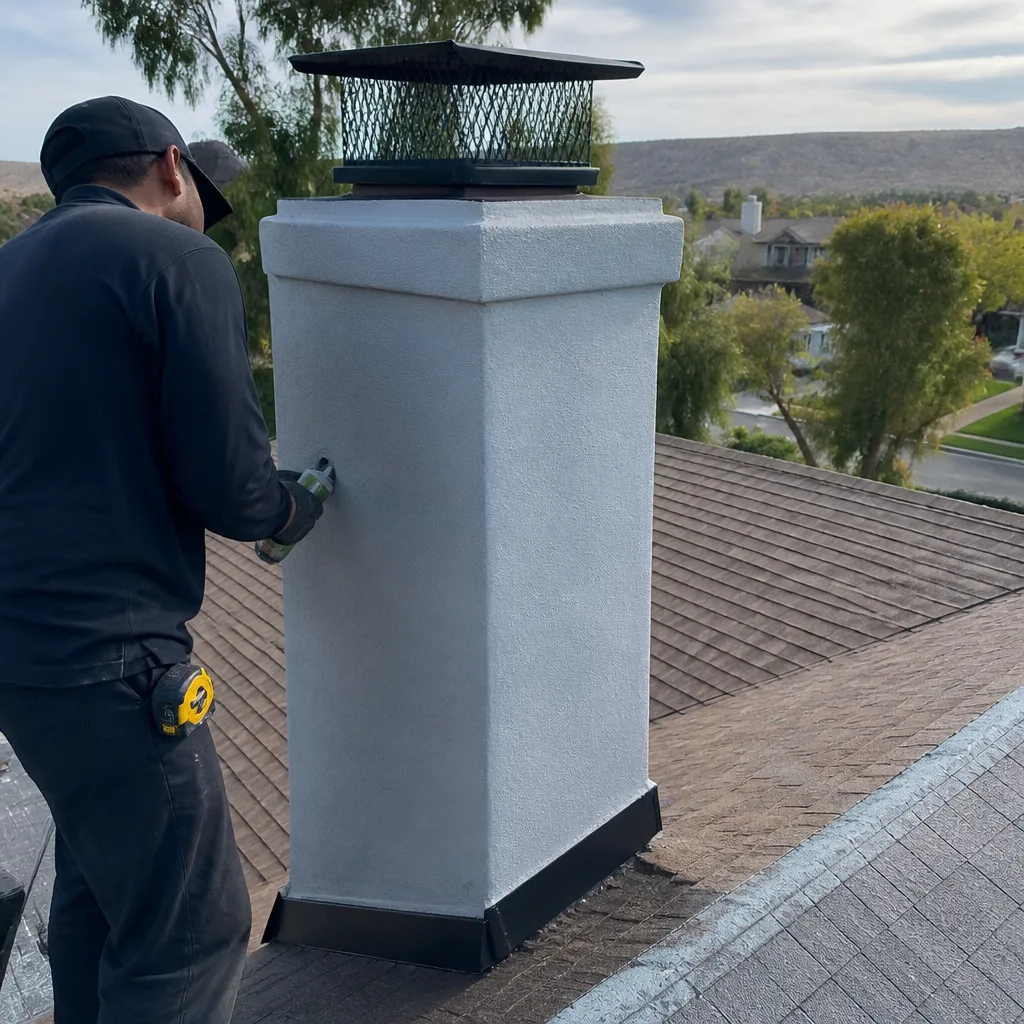
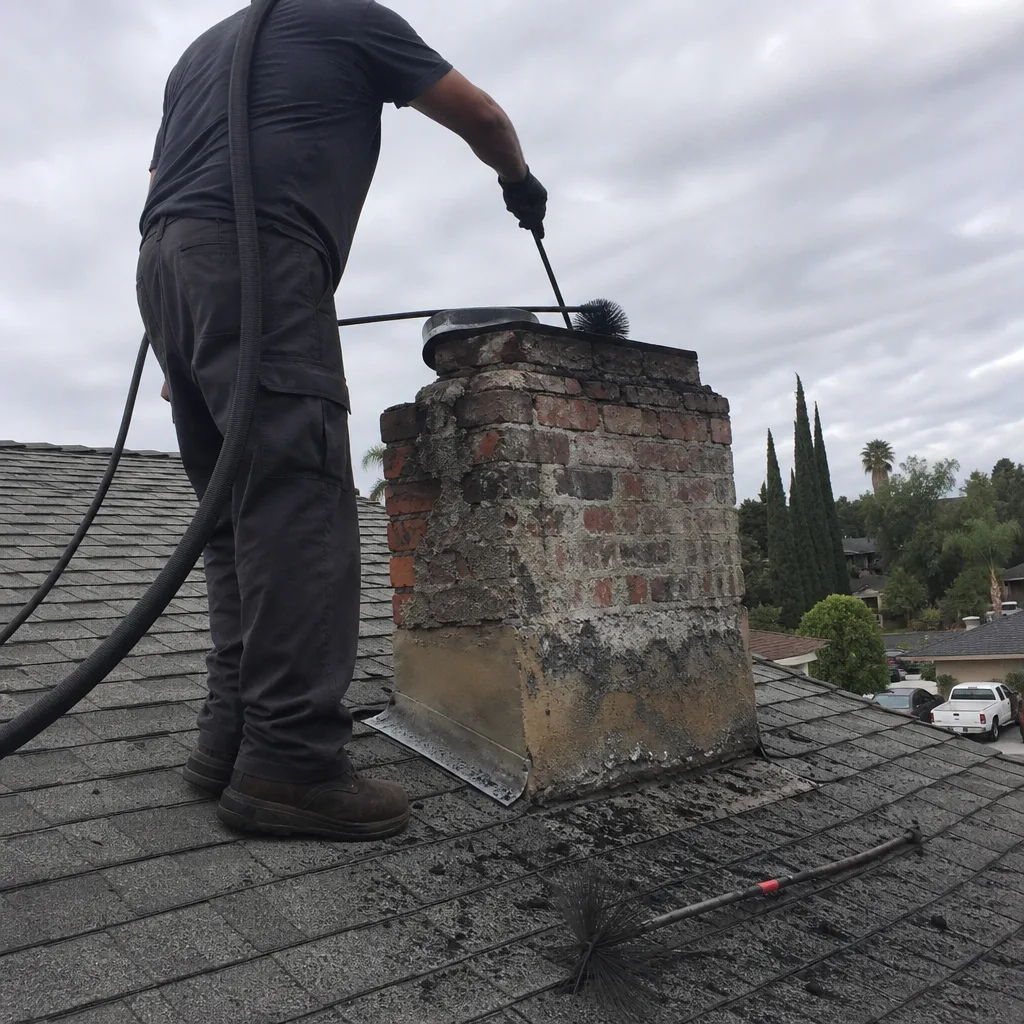
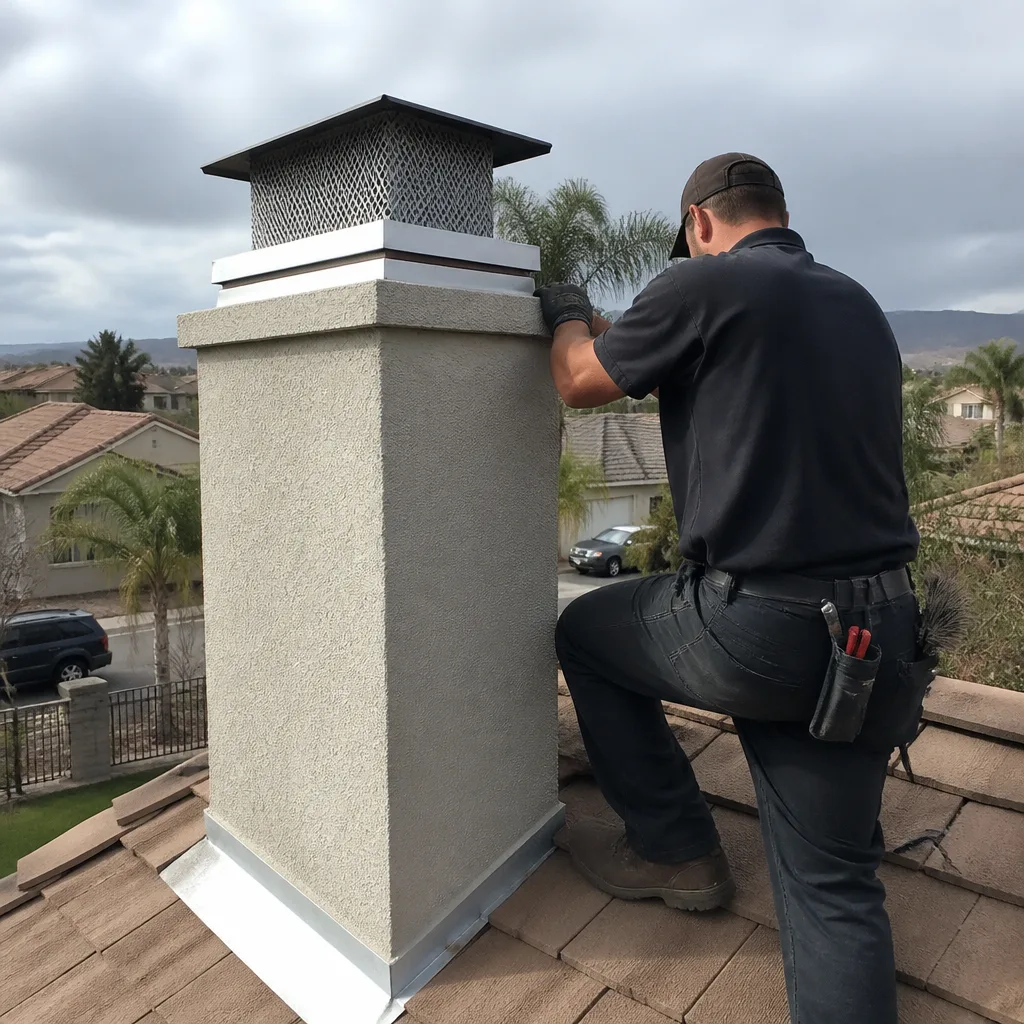
See the difference
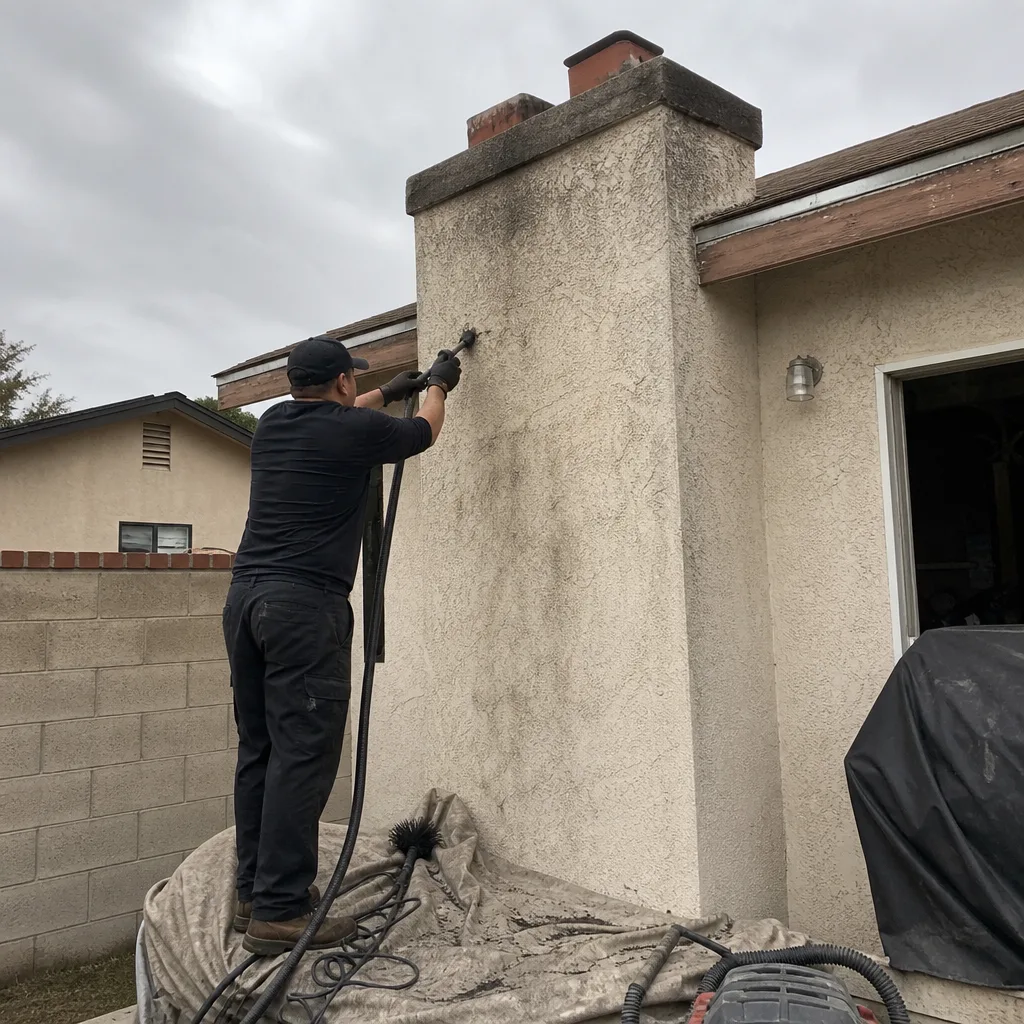 Before
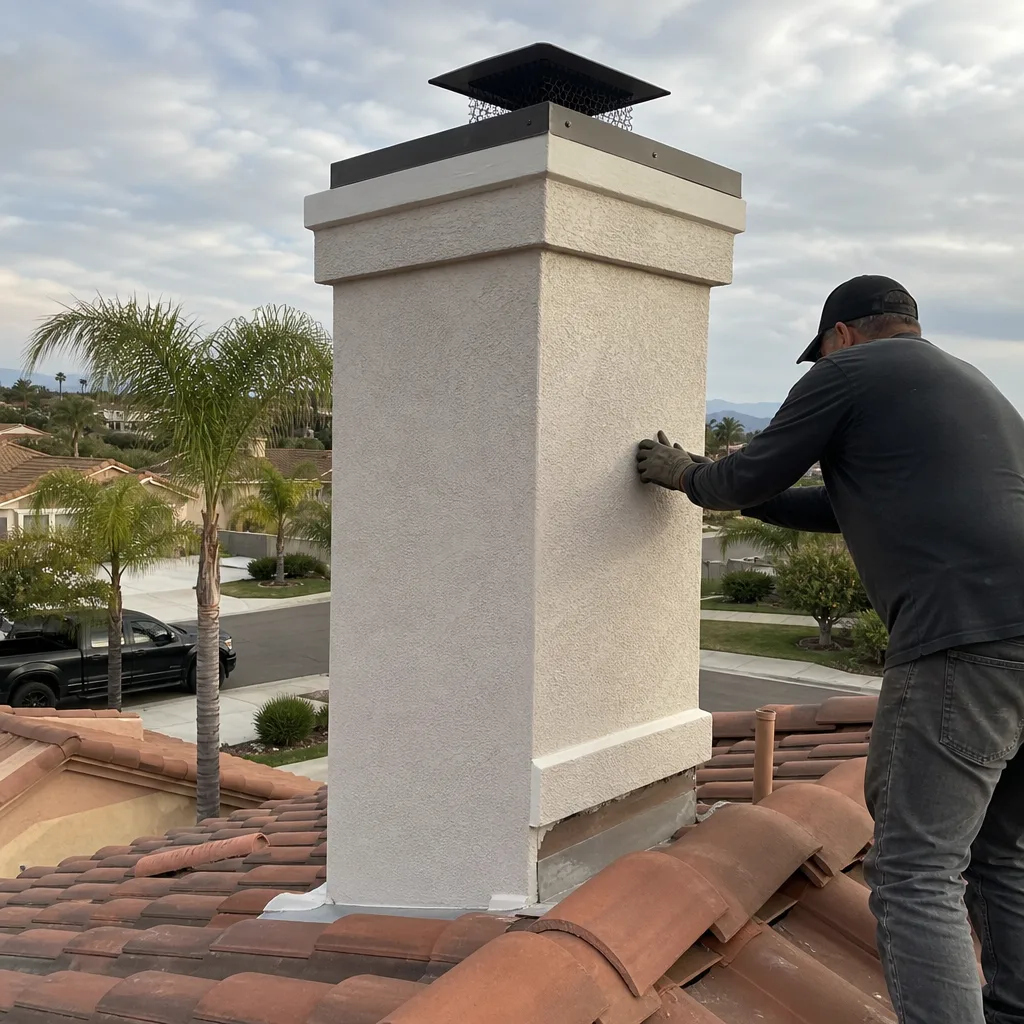 After
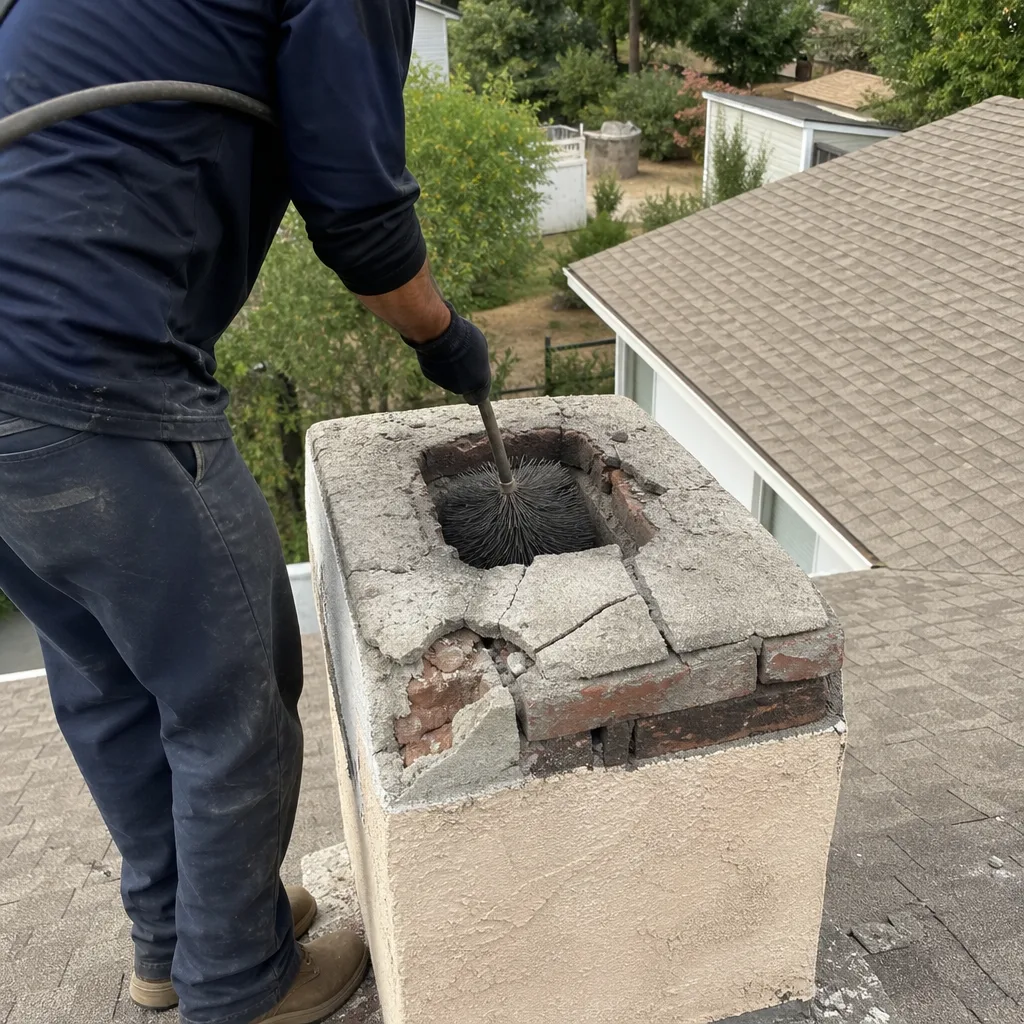 Before
 After
 Before
 After
Frequently Asked Questions
For wood-burning fireplaces, schedule a professional sweep once per year, ideally in February or March after the burn season ends. Gas log set fireplaces can go two years between cleanings with annual inspections. Jurupa Valley’s short burn season means deposits accumulate more quickly during the burning months, so post-season cleaning keeps the flue clear through the summer.
Chimney sweep pricing in Jurupa Valley typically ranges from $150 to $350 depending on the size of the flue, the accessibility of the roof, and the level of deposit buildup. Repairs or liner work are quoted separately after the inspection. Call (866) 285-4905 for an exact quote – estimates are free.
Not always, but if the inspection shows cracked clay tiles, gaps between sections, or missing mortar, a new liner is the fix that prevents fire and carbon monoxide problems. In Jurupa Valley, liners often fail from heat stress over years of dry-heat summers. We don’t recommend liner replacement without camera evidence, and you should never accept a liner quote you can’t see the justification for. Call (866) 285-4905 for an honest assessment.
Creosote accumulates inside the flue and eventually becomes thick enough to ignite. A chimney fire burns hot enough to crack flue tiles, damage the surrounding structure, and spread fire to the house. Less dramatically, restricted airflow pushes smoke and carbon monoxide back into the living space. The tragedy is that all of this is preventable with a routine sweep. Call (866) 285-4905 to schedule yours.
Most homeowners can’t safely access the top of the chimney, and the equipment required to properly sweep a flue – brushes sized to the flue dimensions, vacuums with HEPA filtration, and the training to interpret what comes out – is beyond what a weekend warrior should attempt. A chimney sweep in Jurupa Valley is a professional service for a reason. The inspection itself is often more valuable than the cleaning, because it catches problems you can’t see from inside the house.
Yes. Clothes dryers produce lint that accumulates inside the exhaust pipe, reducing airflow and creating a fire hazard every bit as serious as chimney creosote. The National Fire Protection Association reports thousands of dryer fires annually in the U.S., and the majority involve lint buildup in the vent. If your dryer is taking longer to dry clothes than it used to, or the outside vent flap isn’t opening properly during operation, the vent needs cleaning now. Dryer Vent Cleaning in Jurupa Valley is part of the same maintenance call we make for chimneys.
The Bottom Line
Jurupa Valley has its own chimney calendar, and fighting it costs you time, money, and unnecessary risk. Post-burn-season cleaning in February or March removes deposits while they’re fresh and opens up the spring for repairs. Summer is for heat-stress inspections and cap screens. Fall is for clearing Santa Ana debris before the first fire. January brings a lightweight mid-season check if you’ve been burning regularly. Match your maintenance to that rhythm, burn only what you understand, and stay alert to the signs of trouble. A chimney that’s cleaned by the calendar of the place it sits in – not some generic national guide – works better, lasts longer, and costs less to maintain. Call (866) 285-4905 to schedule your next sweep in Jurupa Valley.
Written by the team at Chimney Sweep Jurupa Valley, serving Jurupa Valley since 2015.