
Last updated November 3, 2026
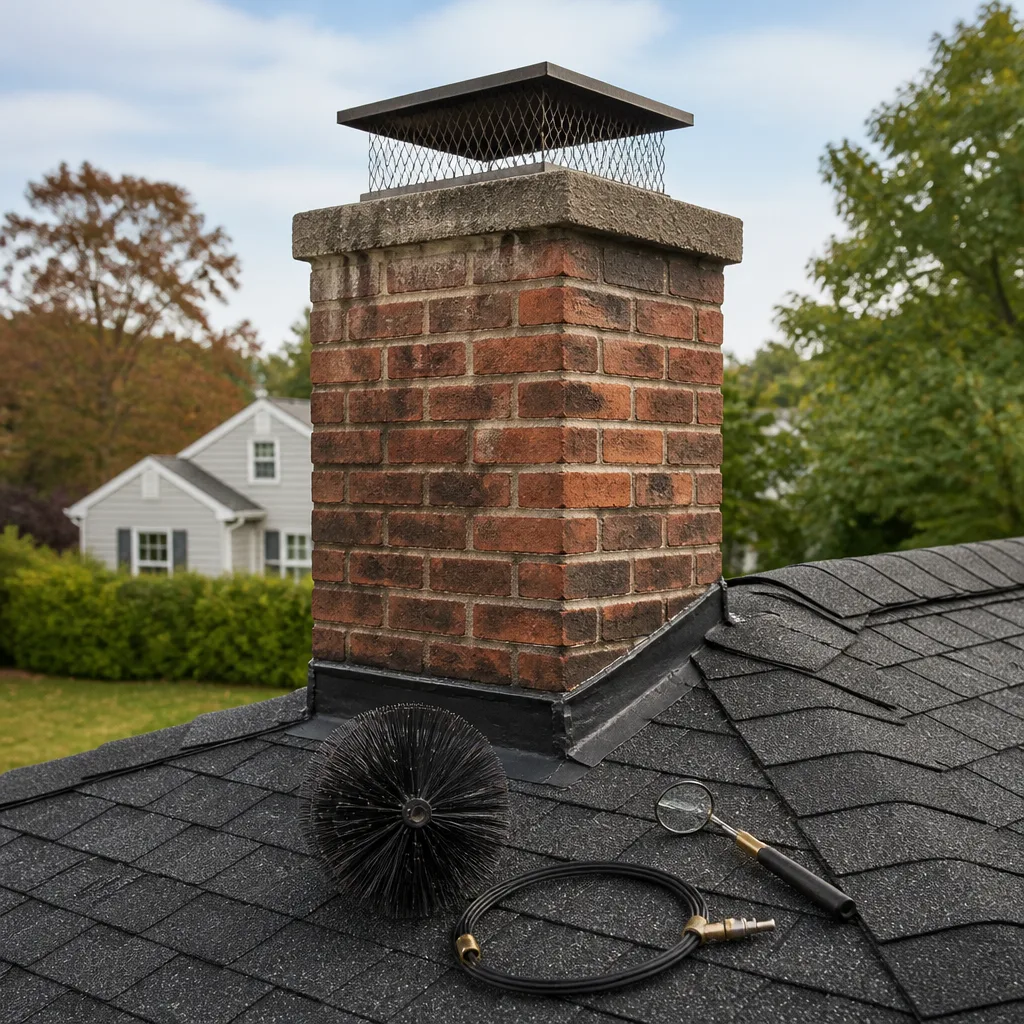 Sweep & inspection
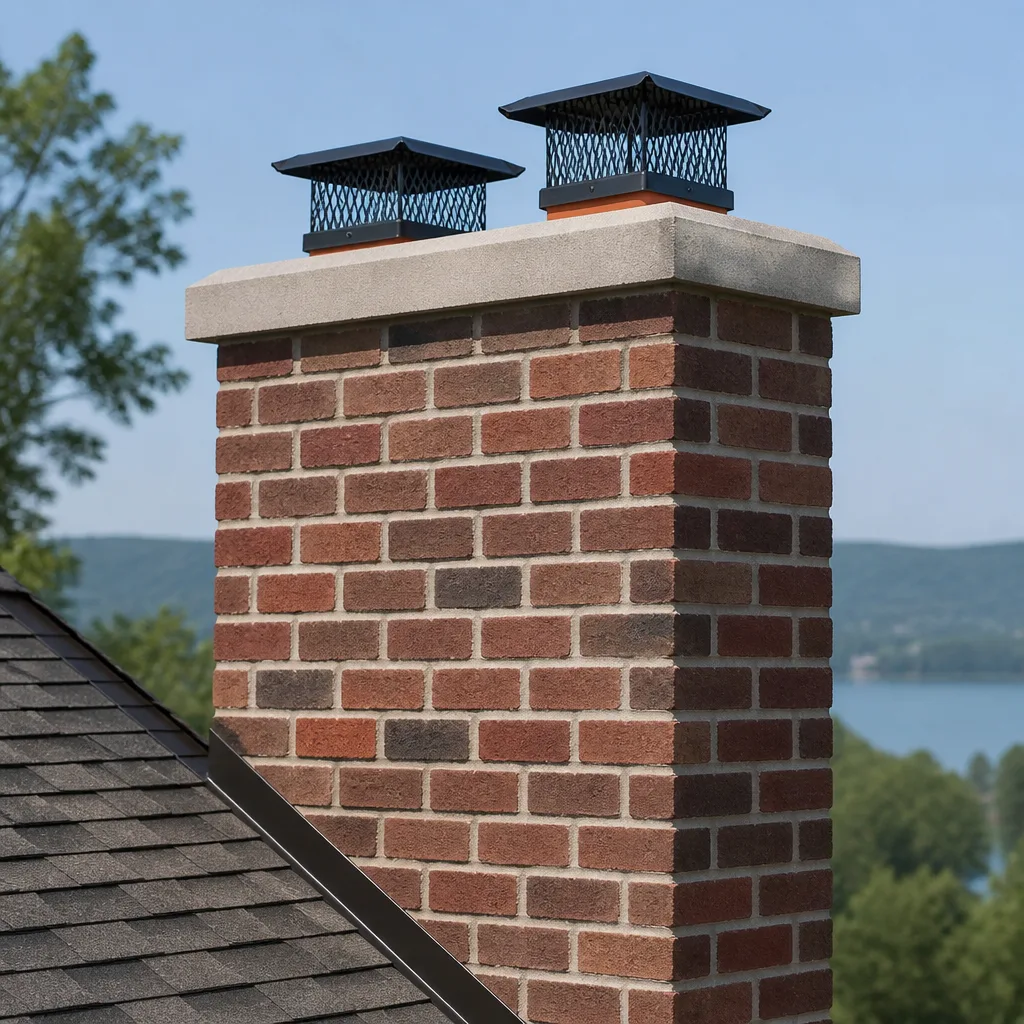 Caps & crowns
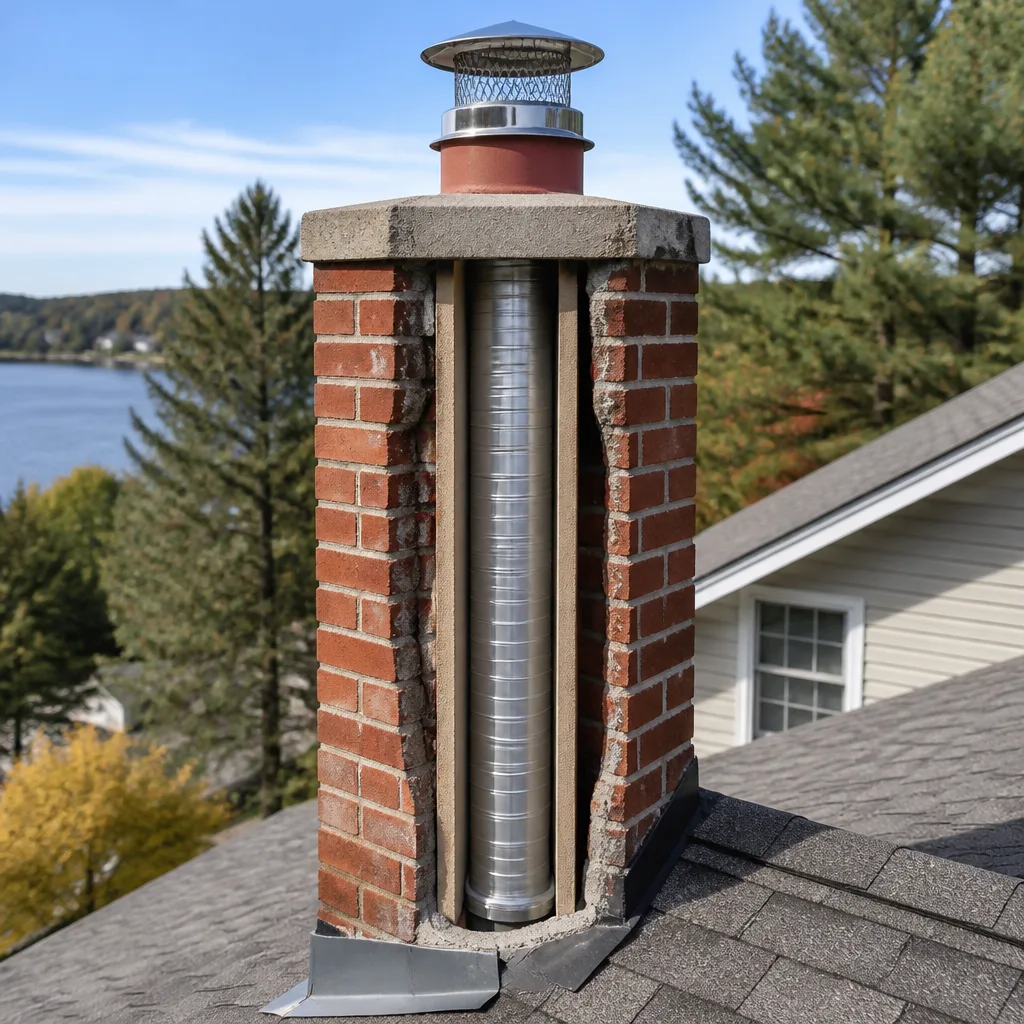 Flue relining
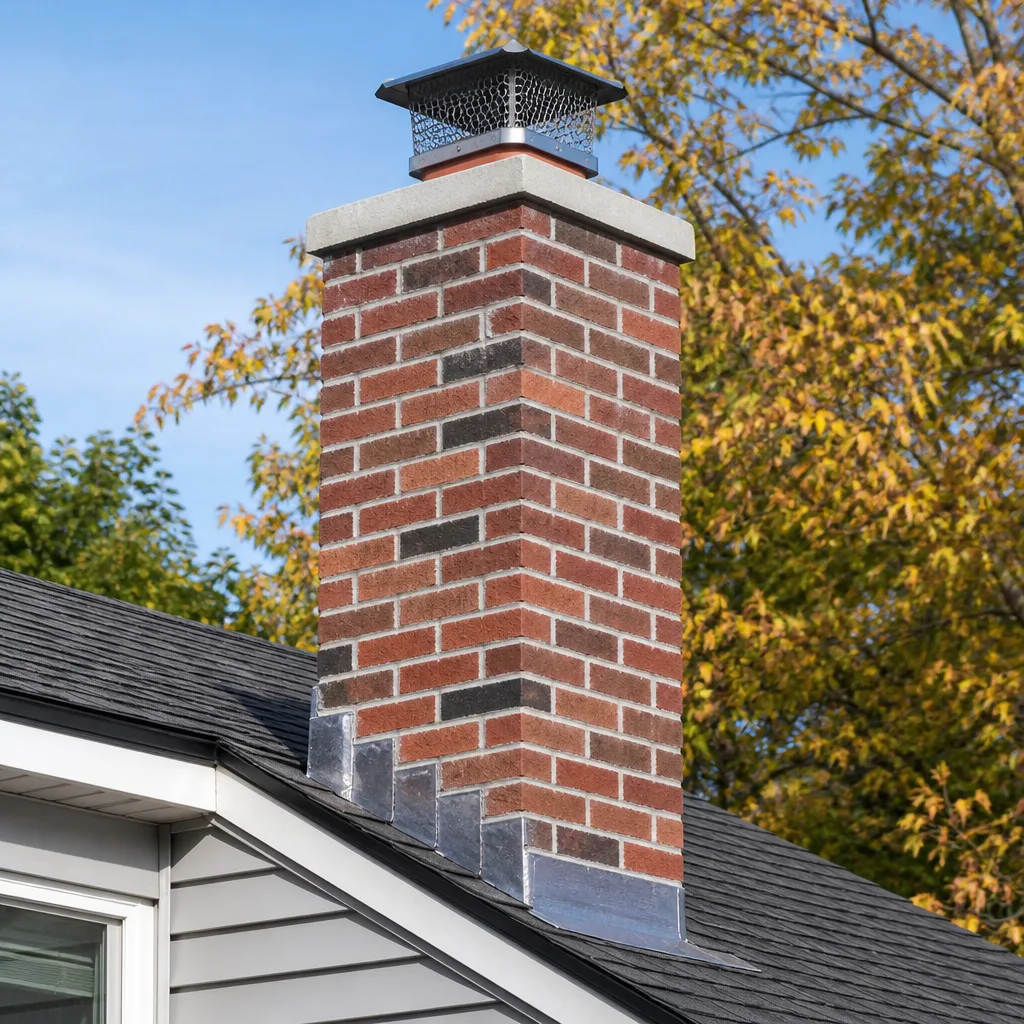 Masonry repair
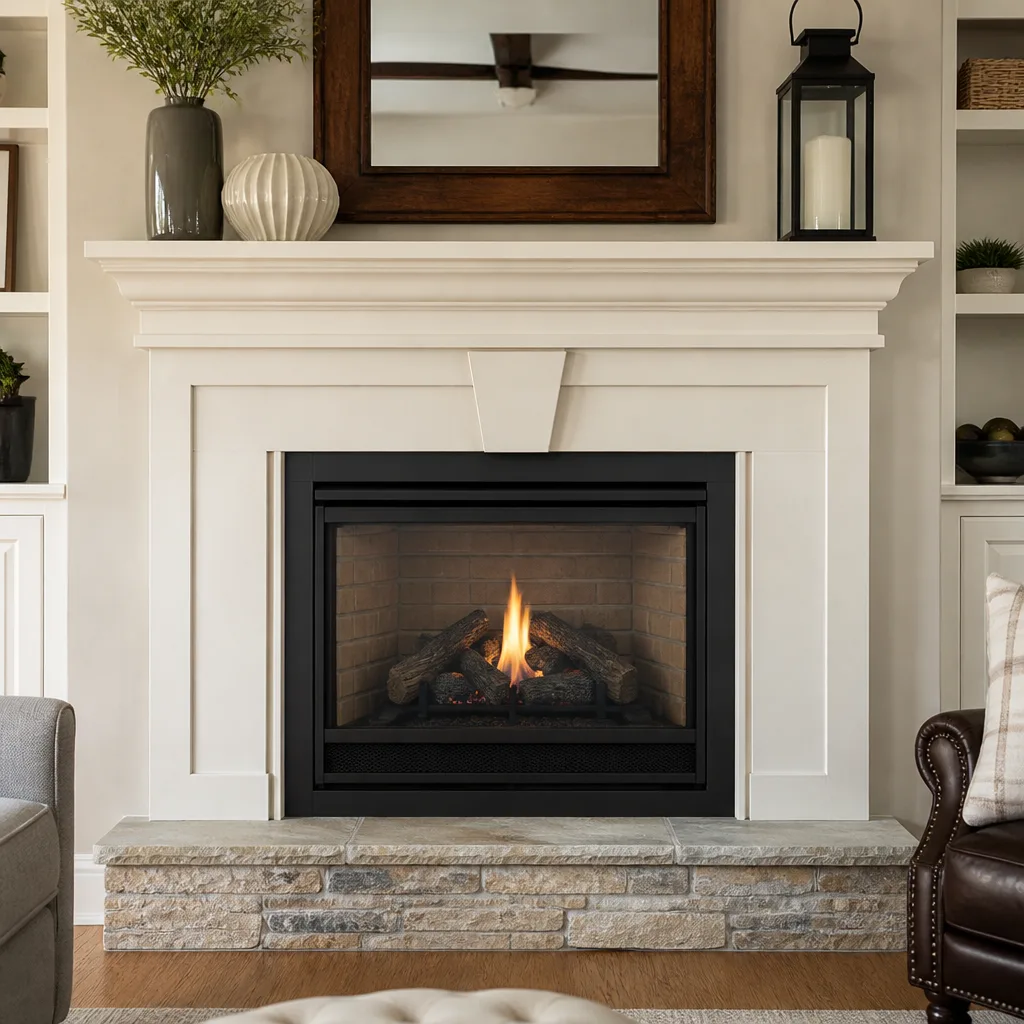 Gas fireplace service
Level 1 sweep and inspection to the NFPA 211 annual standard - flue, crown, cap, and flashing checked and photographed
Chimney sweep logs do not sweep chimneys. They loosen some creosote - which then falls where a brush and vacuum still have to collect it.
The Complete Chimney Sweep Guide for Jurupa Valley Homeowners
Most Jurupa Valley homeowners schedule a chimney sweep once something smells wrong. By that point, creosote has often already progressed past Stage 1, the only stage a standard brush can fully remove. Our Complete Guide to Chimney Cleaning in Jurupa Valley explains what actually happens inside your flue during Southern California’s short but intense burn season, why Jurupa Valley’s climate creates a different creosote pattern than wetter regions, and how to know whether you need a cleaning, a repair, or a full liner evaluation. You’ll learn the inspection levels that matter, the material differences that change how a sweep is performed, and the questions to ask before anyone sets foot on your roof.
Quick Answer
A chimney sweep in Jurupa Valley CA typically costs between $149 and $350 for a standard cleaning and Level 1 inspection, with price varying by flue type, liner material, and creosote stage. Most wood-burning chimneys in Jurupa Valley need sweeping every 30 to 50 burns, but homes near the Santa Ana River bottom or in areas with older clay-tile liners should schedule an inspection before each fall burn season. The right sweep includes a documented inspection of your liner, damper, smoke chamber, and cap, not just a brush run through the flue.
Styles & brands we work with
- Sweep & inspection
- Caps & crowns
- Flue relining
- Masonry repair
- Gas fireplace service
Table of Contents
- Why Jurupa Valley Is Different From Other Chimney Markets
- How Creosote Actually Works: The Three Stages
- Understanding NFPA 211 Inspection Levels
- Liner Materials Matter: Clay Tile vs. Stainless Steel vs. Cast-in-Place
- What a Legitimate Sweep Actually Includes
- How Often Should You Sweep a Chimney in Jurupa Valley?
- How to Verify a Sweep’s Credentials Before You Book
- Your Dryer Vent Is a Fire Hazard Too
Why Jurupa Valley Is Different From Other Chimney Markets
Jurupa Valley sits in a semi-arid pocket of Riverside County where fireplaces get used differently than in colder, wetter climates. Most households here burn wood during a compressed window: November through February, with occasional shoulder-season fires in October and March. That’s four to five months of active use, followed by seven to eight months of dormancy. Compare that to a Minnesota home burning daily from October through April, or a Pacific Northwest home where damp wood and frequent low-temperature fires create a completely different deposit profile.
This short, intense burn pattern matters for one reason: creosote cures during the off-season. When you burn hot fires through the winter, you deposit creosote in varying stages along the flue walls. Then the chimney sits idle through Jurupa Valley’s hot, dry summer. The heat bakes those deposits. They harden. They become more difficult to remove and, in some cases, more flammable. In our experience across Jurupa Valley, we regularly find Stage 2 creosote in chimneys that were swept only eighteen months prior, something you’d rarely see in a year-round burn climate where fresh deposits stay softer.
Santa Ana wind events add another variable. When high winds press against your chimney cap and down the flue, they can dislodge pieces of creosote that have already curled or cracked from thermal stress. Some of that debris falls back into the firebox. Some of it lodges against the damper. And some of it exposes bare spots in the flue where the next fire burns hotter against the liner surface. This is why a post-Santa Ana inspection before firing up your fireplace isn’t paranoia. It’s basic maintenance for a Jurupa Valley home.
The river-bottom neighborhoods, including the areas along the Santa Ana River, also contend with higher ambient humidity than the hillside communities in the Mira Loma and Pedley areas. That moisture differential affects how quickly creosote absorbs atmospheric moisture during the winter, which in turn affects its stage progression and adhesion. A sweep who knows the difference between a Pedley hillside chimney and a river-bottom chimney is working with better information than one who treats every Jurupa Valley address identically.
How Creosote Actually Works: The Three Stages
Creosote forms when wood smoke cools and condenses before it exits the chimney. The smoke carries unburned wood particles, water vapor, and volatile organic compounds upward. When it hits a cooler section of the flue, those materials condense into a tar-like substance that bonds to the liner surface. That’s Stage 1 creosote.
Stage 1 creosote is flaky, dusty, and mostly removable with a standard wire brush. This is what most homeowners picture when they think of Chimney Sweep services: a brush, some soot, and done. But Stage 1 only exists in chimneys that burn hot, dry, well-seasoned wood and get cleaned regularly. Here’s the problem: most firewood sold in bulk in Riverside County isn’t kiln-dried to the moisture content your fireplace wants. Wet wood burns cooler, and cooler fires deposit creosote faster.
Stage 2 creosote is where things get serious. The deposits become crystalline and brittle, almost like blackened honeycomb. A standard brush won’t remove it completely. You’ll scrape the surface, leave the bulk of it, and the remaining creosote acts as a seed layer for faster buildup next season. Removing Stage 2 requires rotary loop tools, chemical treatments, or both. In Jurupa Valley homes with older masonry chimneys and unlined flues, Stage 2 is the most common finding at the first professional inspection in years.
Stage 3 creosote is a glaze. It looks like hardened tar, and it frequently contains enough fuel to sustain a chimney fire on its own. At this stage, you’re not scheduling a sweep. You’re scheduling a restoration assessment. Chemical removal agents alone can’t fix Stage 3 glaze. The flue often needs mechanical removal with specialized equipment, and in severe cases, a chimney fire may have already compromised the clay tile liner to the point where a Chimney Repair in Jurupa Valley is non-negotiable before the fireplace runs again.
The key insight for Jurupa Valley homeowners: catching creosote at Stage 1 is cheap and routine. Catching it at Stage 3 is expensive and structural. The difference between those outcomes is almost always sweep frequency and burning habits, not luck.
Understanding NFPA 211 Inspection Levels
The National Fire Protection Association standard 211 defines three chimney inspection levels. Every legitimate chimney company follows these. If a sweep quotes you a cleaning without referencing an inspection level, ask why.
Level 1 inspection covers the readily accessible portions of your chimney: the firebox, damper, smoke chamber, and the interior of the flue. This is the standard inspection included with every routine sweep. It uses a flashlight, a mirror, and sometimes a basic camera. If nothing has changed since your last sweep, same appliance, same fuel, same usage, a Level 1 is appropriate.
Level 2 inspection is required when something changes: you buy a home, you switch fuel types, you install a new insert, you change the flue lining, or you’ve had an event like a chimney fire, an earthquake, or significant structural movement. A Level 2 adds a video camera scan of the entire flue interior, from the firebox to the cap. It also includes inspection of the attic and crawlspace portions of the chimney when accessible. After a Santa Ana wind event that dropped tree branches onto your roof or rattled your chimney cap, a Level 2 is the right call before the burn season starts.
Level 3 inspection is the most invasive. It usually involves opening access panels or removing portions of the chimney structure to inspect concealed areas. This happens when a Level 1 or Level 2 turns up evidence of serious damage: cracked flue tiles, deteriorating mortar joints, signs of a previous chimney fire. In Jurupa Valley’s older housing stock, particularly homes built before 1990, Level 3 inspections sometimes reveal chimney systems that were never built to current code in the first place.
Every Chimney Sweep Jurupa Valley home page we publish assumes the reader wants this level of clarity. It changes how you hire, and it changes what you accept as “done.”
Liner Materials Matter: Clay Tile vs. Stainless Steel vs. Cast-in-Place
Your chimney liner is the single most important safety component in the system, and the material it’s made from determines how a sweep is performed.
Clay tile liners are the standard in most Jurupa Valley homes built before the mid-1990s. They work fine when maintained, but they crack. Thermal stress, water intrusion, and minor chimney fires all take a toll. Once a clay tile cracks, the gap exposes the surrounding masonry to heat and gases. A sweep on a cracked clay liner requires care: aggressive rotary brushes can worsen the damage. The sweep needs to identify the crack, document it, and recommend either repair or replacement before continued use.
Stainless steel liners are common in newer construction and as retrofits. The smooth surface resists creosote buildup better than clay tile, which means sweeps are faster and deposits are usually lighter. But stainless steel is also more easily scratched by the wrong brush type. A professional uses a poly brush or a brush specifically rated for stainless, never a wire brush that can gouge the metal. If your Jurupa Valley home has a stainless liner, confirm the sweep knows it before they start.
Cast-in-place liners are less common but present in some higher-end homes. These liners are poured in place, forming a seamless insulating barrier inside the existing flue. Cleaning them requires a gentler approach still, with attention to the surface texture and curing characteristics. A sweep who treats every liner the same is the reason some cast-in-place liners get damaged during routine maintenance.
We name the materials we use. When a liner replacement is necessary, we work with products like DuraFlex, a flexible stainless steel liner system that professional chimney specialists across the country rely on. For restoration-level repairs on deteriorating flue tiles, we apply HeatShield, a resurfacing compound that can restore the flue interior without a full teardown. These aren’t hardware-store substitutes. They’re trade-grade materials sourced from the same supply networks, including Copperfield, that certified specialists use nationwide. Most Jurupa Valley homeowners never hear these names from a local sweep. You should.
What a Legitimate Sweep Actually Includes
A professional chimney sweep is not a brush on a rod. Here’s what a complete service should include, start to finish:
- Floor protection and dust containment before any work begins. The sweep should lay drop cloths, run a HEPA vacuum, and make sure no soot enters your living space.
- Visual inspection of the firebox for cracks, loose bricks, or damaged refractory panels. This is the chamber where the fire actually burns.
- Damper operation check. The damper opens, closes, and seals properly. A damper that won’t fully open creates smoke backup. A damper that won’t fully close lets conditioned air escape year-round.
- Smoke chamber inspection. This is the tapered section above the damper where smoke accelerates into the flue. Mortar deterioration here is common in older Jurupa Valley homes and frequently missed by less thorough sweeps.
- Flue cleaning using the appropriate brush type and size for your liner material. One-size brushes damage liners and leave creosote behind.
- Smoke shelf and upper chamber cleaning. Creosote accumulates here even when the flue looks clean from below.
- Cap and crown inspection from the roof. A damaged cap lets rain, birds, and debris into the system. A cracked crown lets water into the masonry structure.
- Post-sweep camera report where included. You should see images of your flue before and after, not just a receipt for “cleaning performed.”
We explain what’s happening inside your flue, not just what we charged you for. A legitimate post-sweep report documents liner condition, damper operation, smoke chamber mortar integrity, and cap status. If a company can’t show you these things, you didn’t get a sweep. You got a brush through a hole.
How Often Should You Sweep a Chimney in Jurupa Valley?
The short answer: more often than the national average recommends, because Jurupa Valley’s burn pattern concentrates creosote into a shorter window with a longer curing period. Here’s a breakdown by usage:
- Frequent burners (3 or more fires per week during fall and winter): sweep every 25 to 30 burns, which usually translates to twice per season for an active household.
- Moderate burners (1 to 2 fires per week): sweep once at the end of the season, before the summer curing starts hard-baking the deposits.
- Occasional burners (a few fires per month): sweep once per year, ideally before the first fall fire.
- Gas log or gas insert users: sweep every other year, but have the unit and venting inspected annually. Gas doesn’t create creosote, but it can create soot buildup if the burner isn’t adjusted correctly.
If you burn unseasoned or partially seasoned wood from local suppliers, move yourself up one category. Wet wood creates creosote at a dramatically faster rate, and most wood sold as “seasoned” in Riverside County hasn’t actually dried to below 20% moisture content.
If your chimney has a history of Stage 2 or Stage 3 creosote, or if you’ve had a chimney fire, don’t rely on a calendar. Schedule a Chimney Sweep in Jurupa Valley inspection before each burn season regardless of how few fires you had last year. The deposits you can’t see are the ones that start fires.
How to Verify a Sweep’s Credentials Before You Book
The chimney industry has a certification body: the Chimney Safety Institute of America, or CSIA. Certified sweeps pass a technical exam and commit to continuing education. But a CSIA certification alone doesn’t tell you everything. Here’s the verification process we recommend:
- Visit the CSIA website and use their certified professional lookup tool. Enter the company name or the sweep’s name. If they’re not there, they’re not certified, regardless of what their website says.
- Ask about inspection levels. A certified sweep should be able to explain Level 1, 2, and 3 without hesitating. If they don’t know what you mean, hang up.
- Ask about brush types. What kind of brush do they use for stainless steel liners? For clay tile? If the answer is “a chimney brush,” that’s a red flag.
- Ask about their camera. Do they video-scan flues during Level 2 inspections? Can they show you images? A company without camera capability can’t document liner condition, which means they can’t prove their findings.
- Ask about repairs. If the inspection finds a cracked liner or a failed damper, what happens next? Some sweeps only clean. They’ll hand you a report and walk away. A company with in-house repair capability means you don’t get handed off to a separate contractor.
Cleaning is step one, we also fix what we find. That distinction matters. When your Chimney Repair in Jurupa Valley team handles both the inspection and the fix, there’s no gap between diagnosis and resolution.
Your Dryer Vent Is a Fire Hazard Too
While we’re talking about fire hazards in Jurupa Valley homes, the clothes dryer vent deserves equal attention. Lint accumulation in a dryer vent is the second most common cause of household fires in the United States, and it’s almost entirely preventable with regular cleaning.
Dryer vents accumulate lint in the transition duct behind the dryer, at bends and elbows, and at the exterior termination point. In Jurupa Valley’s dry summers, that lint is bone-dry kindling. One restricted airflow event, one overheated heating element, and the situation escalates quickly. This is why professional Dryer Vent Cleaning in Jurupa Valley services matter alongside chimney maintenance. The same team that inspects your chimney can clean your dryer vent, using Famco venting components when repairs to the vent system itself are needed.
If your dryer takes longer than 40 minutes to dry a normal load, if the exterior vent flap doesn’t open fully during operation, or if you can smell lint burning during a cycle, stop using the dryer and get the vent cleaned. These are specific warning signs, not vague concerns.
Common Mistakes to Avoid
- Skipping the inspection and requesting only a sweep. The sweep removes deposits; the inspection finds structural problems. You need both, and skipping the second one means problems compound silently.
- Firing up the fireplace after Santa Ana winds without checking the cap and flue. Debris, dislodged creosote, and even structural movement happen during high-wind events. A quick visual check costs ten minutes.
- Burning construction lumber or trash in a residential fireplace. Pressure-treated wood, plywood, and painted lumber release toxic chemicals and create dense, fast-accumulating creosote. Only seasoned hardwood belongs in a fireplace.
- Assuming a gas fireplace never needs service. Gas logs and inserts still need venting inspections. Soot buildup from improperly adjusted burners, blocked vents, and deteriorating gaskets are all real issues in Jurupa Valley homes.
- Trusting a cheap sweep price without asking what’s included. A $79 sweep that skips the smoke chamber inspection or doesn’t check the damper is worse than no sweep at all, because it creates false confidence.
- Waiting for the smell to tell you something’s wrong. By the time a chimney smells bad in summer, the creosote has been curing for months. The smell is a late-stage symptom, not an early warning.
- Ignoring a dryer that takes two cycles to dry towels. That’s not a dryer problem. That’s a vent airflow problem. Fix it before it becomes a fire.
See the difference
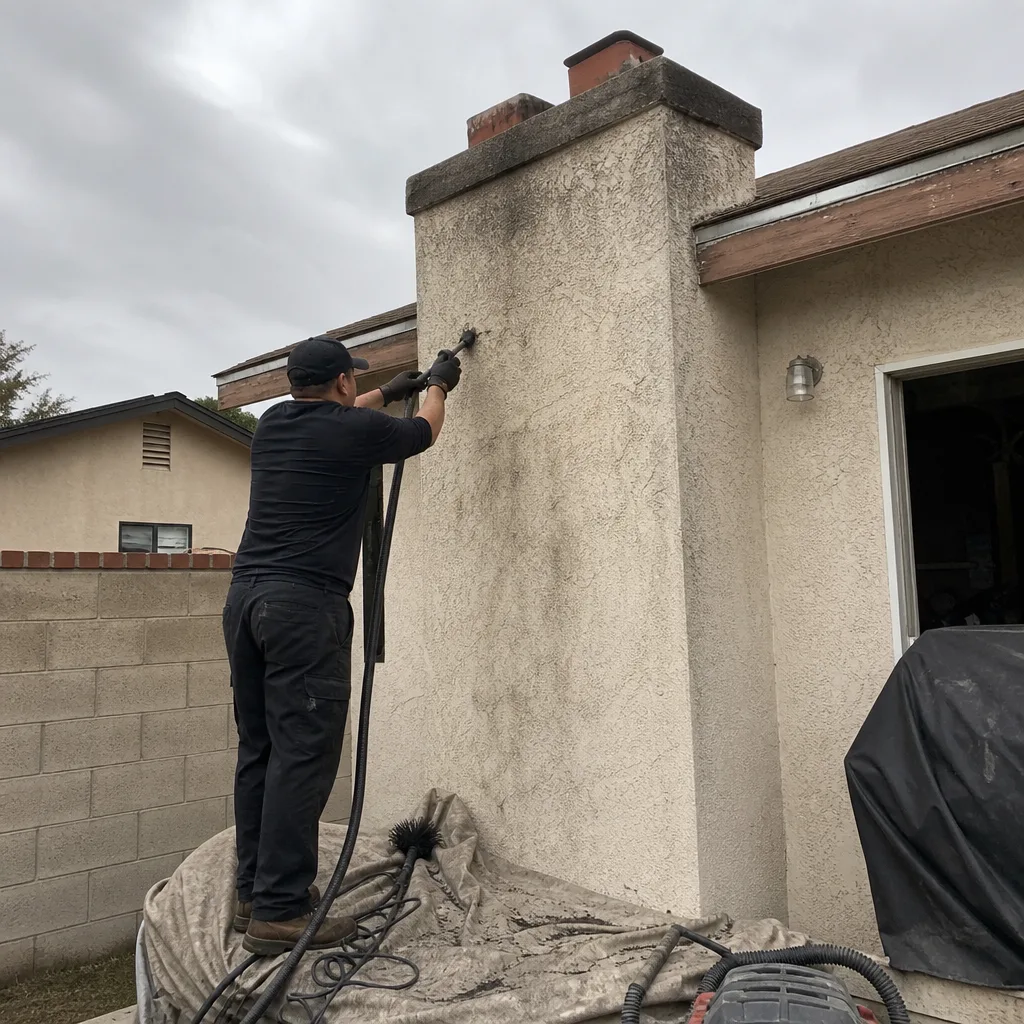 Before
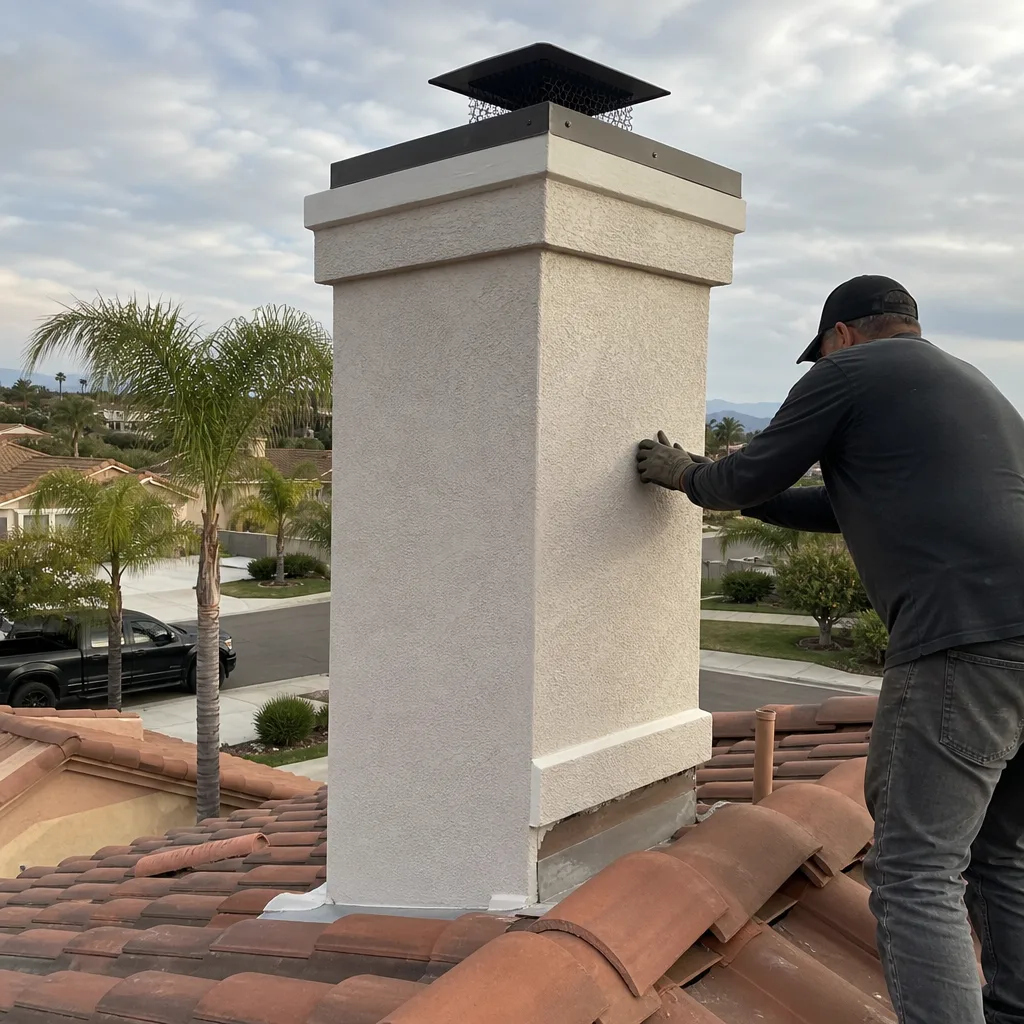 After
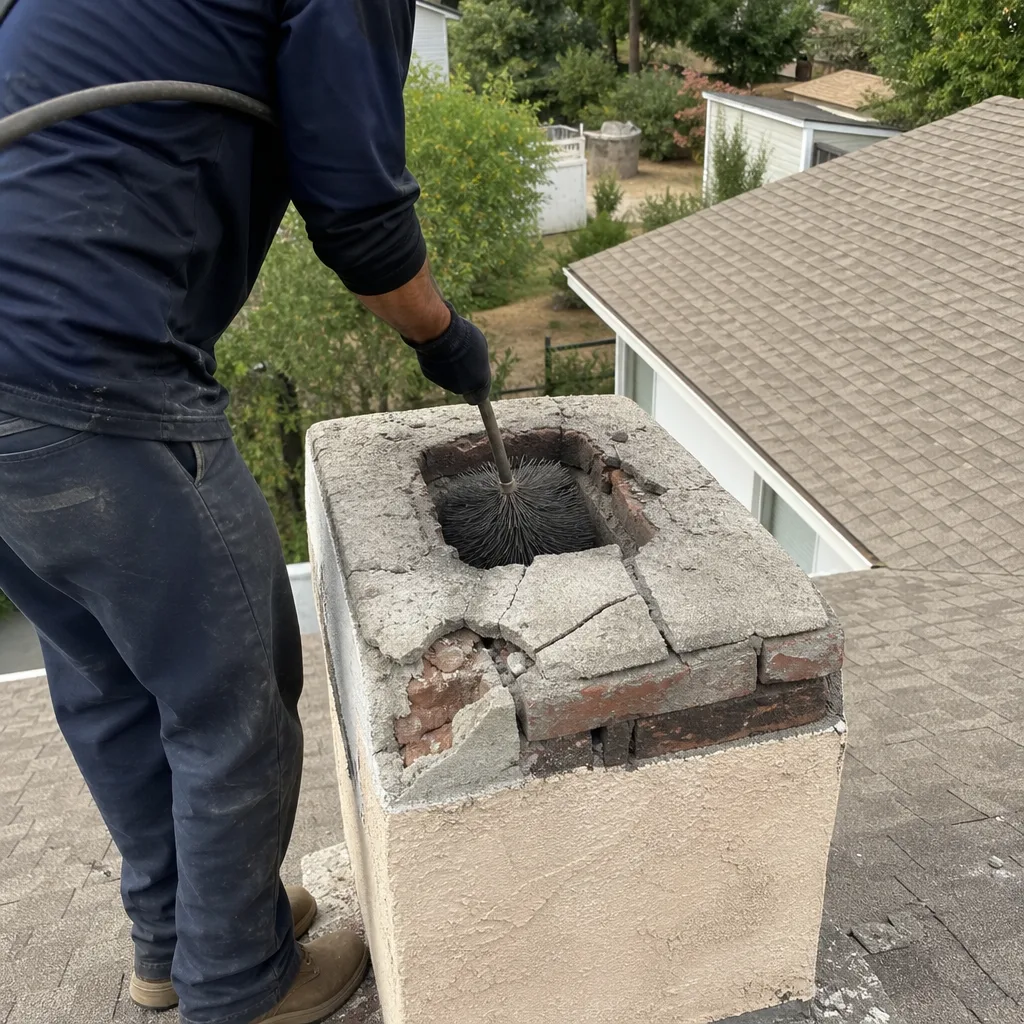 Before
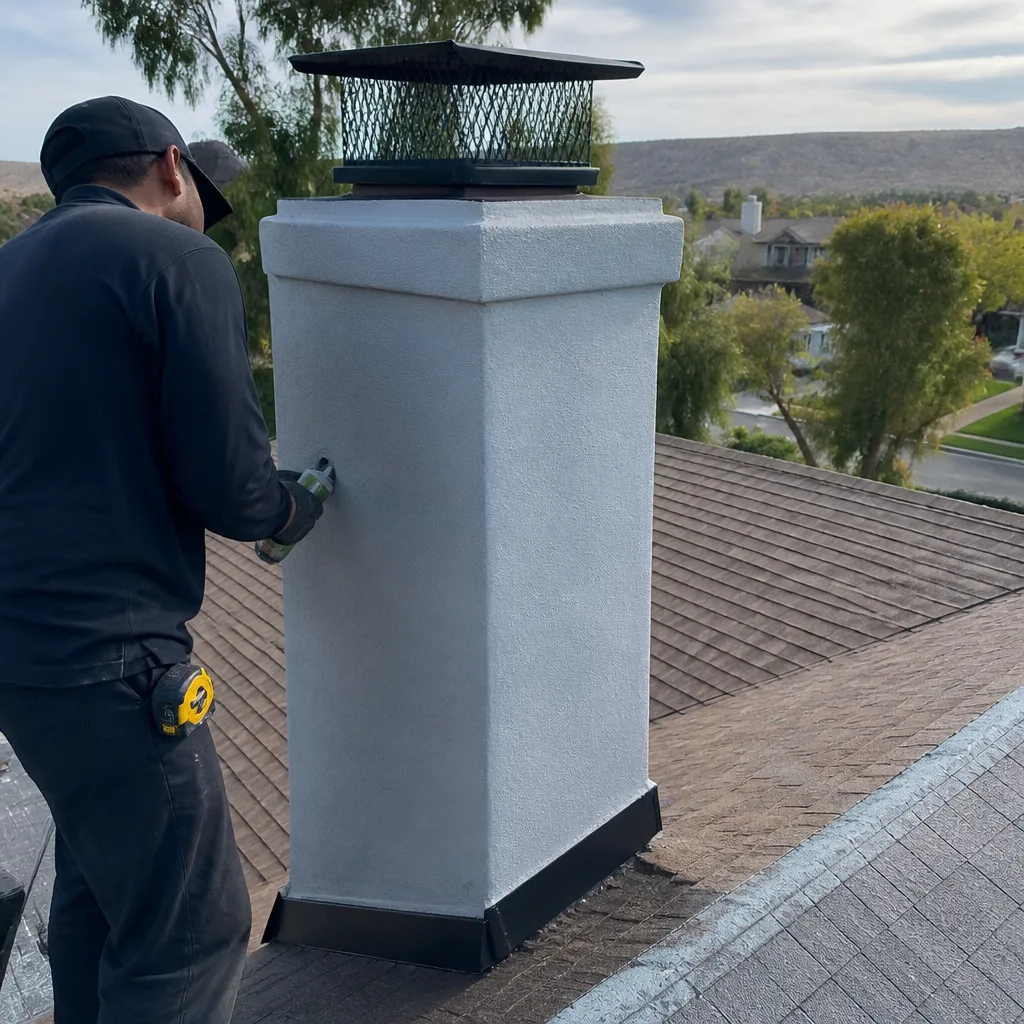 After
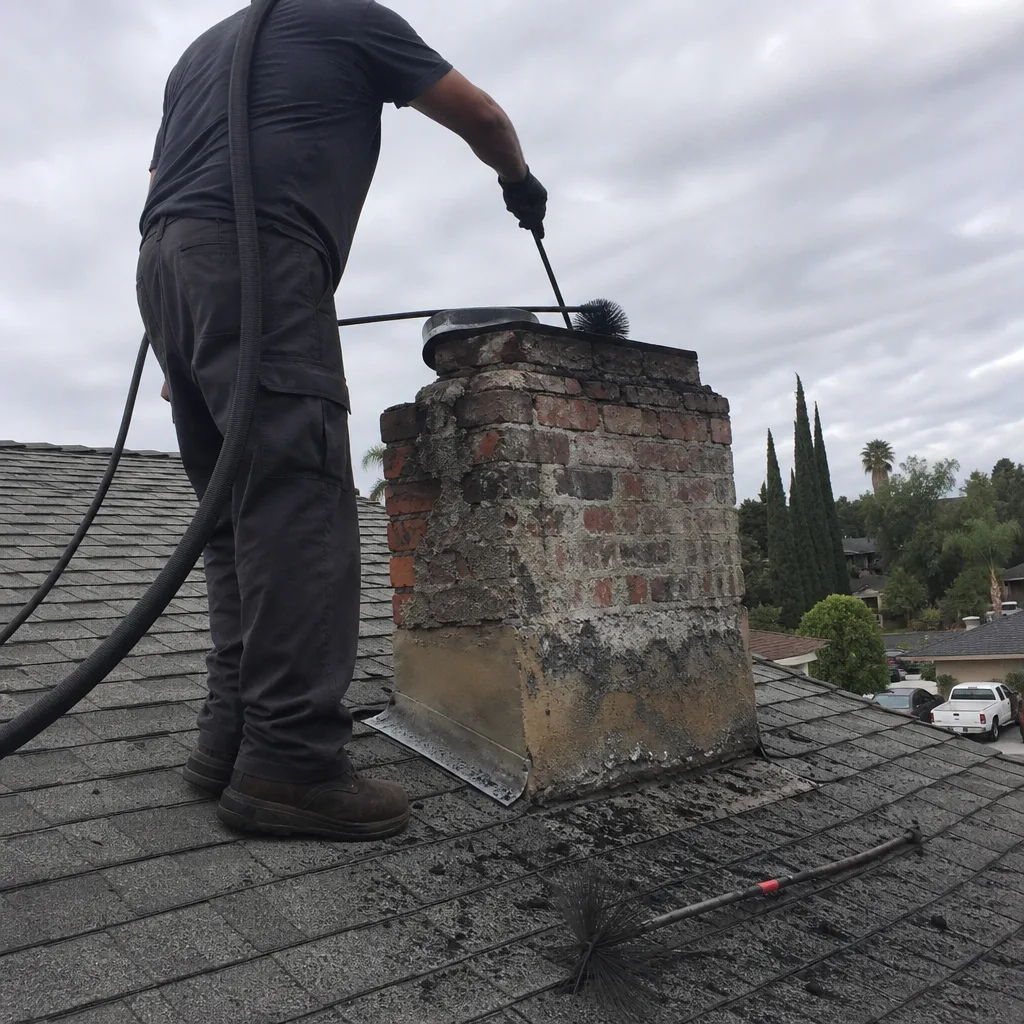 Before
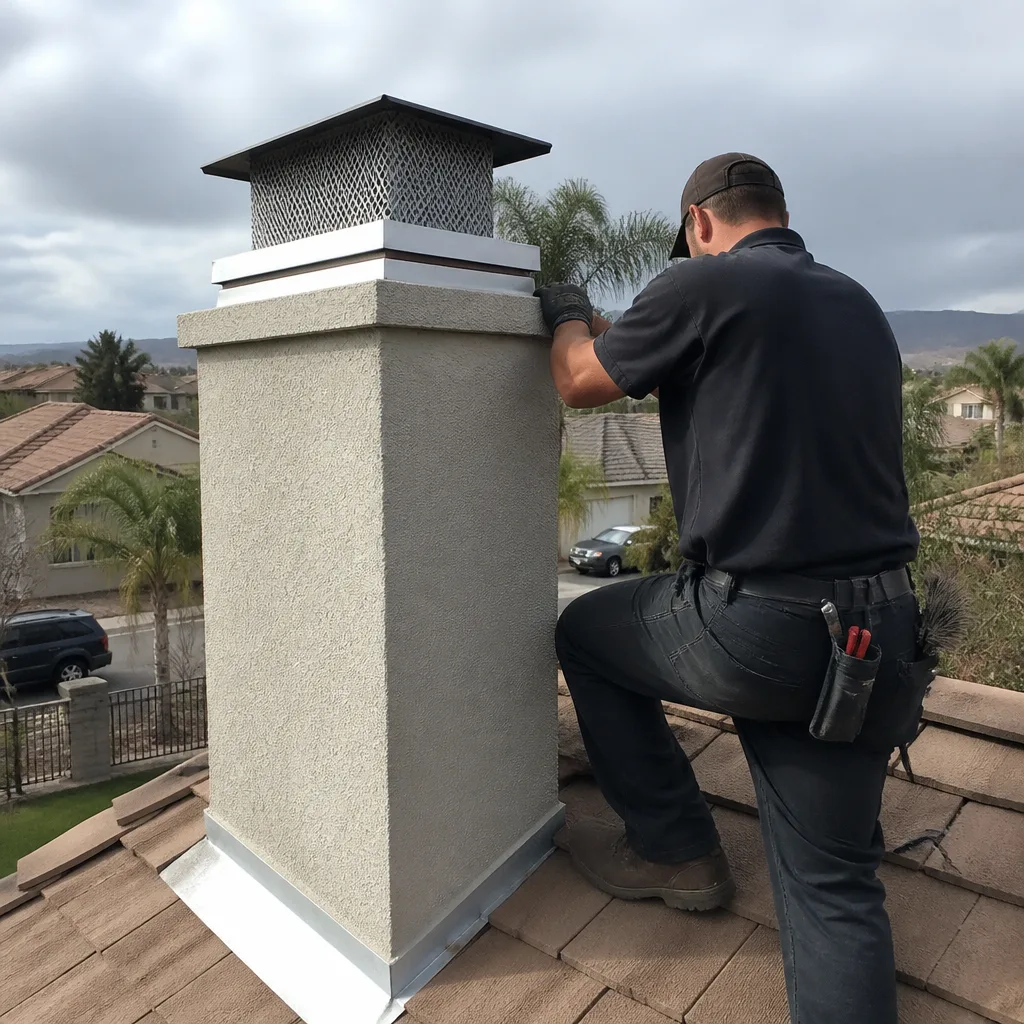 After
When to Call a Professional
Some things you can check yourself: the firebox for visible cracks, the damper for smooth operation, the cap for obvious damage. But you can’t see inside your flue without a camera, and you can’t remove Stage 2 or Stage 3 creosote with a hardware-store brush. Call a professional if you’ve burned more than 30 fires since your last sweep, if you smell a campfire-like odor coming from the fireplace in summer, if you’ve had a chimney fire, if you’re buying a home and need a Level 2 inspection, or if your dryer vent hasn’t been cleaned in over a year. See our DIY vs Professional Chimney Cleaning: The Jurupa Valley Homeowner’s Decision Guide to decide what’s right for you. Chimney Sweep Jurupa Valley offers free estimates in Jurupa Valley. Call (866) 285-4905 to schedule a chimney sweep, inspection, or dryer vent cleaning.
Frequently Asked Questions
A standard chimney sweep with a Level 1 inspection in Jurupa Valley typically runs between $149 and $350, with additional costs for Level 2 camera inspections, Stage 2 or 3 creosote removal, or repair work discovered during the visit. Call (866) 285-4905 for an exact quote on your specific chimney system. Estimates are free.
Most wood-burning households in Jurupa Valley should sweep once per year at minimum, with heavier users sweeping twice per season. The local burn pattern of concentrated winter use followed by hot, dry summers creates faster creosote hardening than other climates.
You need a Level 2 inspection if something has changed: new home purchase, new appliance, burned a chimney fire, survived an earthquake, or experienced Santa Ana wind damage to your roof or cap. A Level 2 includes a video scan of the entire flue, which is the only way to see cracks, gaps, or hidden damage that a mirror-and-flashlight Level 1 misses.
Creosote continues accumulating. Stage 1 progresses to Stage 2, then Stage 3. Eventually, the deposits ignite into a chimney fire, which can crack liners, damage masonry, and spread to the house structure. Carbon monoxide blockage is another risk if the flue becomes restricted enough. The incremental cost of a sweep is insignificant compared to the repair cost of fire damage.
No. Clay tile requires a different brush type and a more careful approach, especially if the tiles are already cracked. Stainless steel liners need poly brushes or stainless-rated brushes to avoid scratching. The wrong brush on the wrong liner causes damage that reduces the life of the system.
Gas fireplaces don’t produce creosote, but they do produce soot if the burner is out of adjustment, and the venting system needs annual inspection. Gas logs, inserts, and direct-vent systems should be checked every year for blockages, gasket wear, and proper operation.
If your dryer takes longer than 40 minutes to dry a normal load, if the exterior vent flap doesn’t open fully during operation, or if the laundry room gets unusually hot during cycles, the vent is restricted and needs professional cleaning. Lint buildup is a fire hazard that sits ignored in most homes.
The Bottom Line
A chimney sweep in Jurupa Valley is not a one-size service. Your flue type, liner material, burn frequency, and the local climate all shape what a proper maintenance visit looks like. The key takeaways are simple: sweep based on your actual usage, not a generic annual rule. Know which inspection level applies to your situation. Demand material-level transparency, because the products going into your chimney matter. And treat the dryer vent with the same seriousness as the fireplace. For more guides & resources on keeping your home safe, or if you live in Jurupa Valley and want a chimney sweep that documents what it finds and fixes what it uncovers, call (866) 285-4905 for a free estimate.
Written by the team at Chimney Sweep Jurupa Valley, serving Jurupa Valley since 2015.